

ESET, an EU-based security company, has recorded a more than 50% increase in Android ransomware detections in 2016, the highest number of attempts to infiltrate devices ever. ESET presents the latest annual data based on LiveGrid technology in the white paper “Trends in Android Ransomware”. The findings are revealed ahead of Mobile World Congress, taking place in Barcelona (February 27 – March 2, 2017).
“Overall we saw an increase in malware detections on Android devices of around 20%, with ransomware on this platform growing at an ever-faster pace. Although ESET recorded the largest increase in the first half of 2016, we cannot say with any certainty that this threat will disappear anytime soon,” says ESET Chief Technology Officer Juraj Malcho, who will be discussing this topic at MWC 2017.
The creators of crypto-ransomware, which encrypts files and locks device screens, have spent the past 12 months copying effective techniques used in desktop malware attacks. They have also developed their own more sophisticated methods specifically for targeting Android devices.
In addition to the more widespread scare tactics used by “police ransomware” that locks screens, cybercriminals are trying to keep a low profile by encrypting the malicious payload and “burying” it even deeper in infected applications.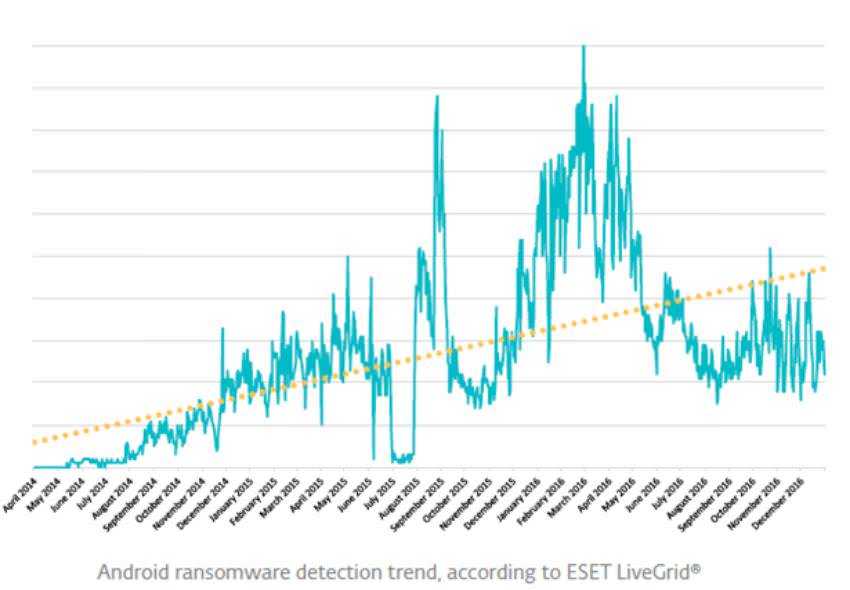
In 2015, ESET observed that the focus of Android ransomware creators had shifted from users of devices in Eastern Europe to users in the US. However, last year saw a growing interest in the Asian market. “Indeed, we can say that ransomware targeting Android has become a large-scale global threat,” Malcho adds.
For full access to the findings, download the ESET white paper “Trends in Android Ransomware” (PDF)
