

StereoLabs: Humans have stereoscopic vision. With two eyes, two perspectives, and the powerful processing power of the brain, we can perceive distance with our eyes, which allows us to reach our food, not spill our coffee, and perform tasks with surgical precision.
A fledgling startup called StereoLabs has developed the first affordable high-definition stereoscopic camera. 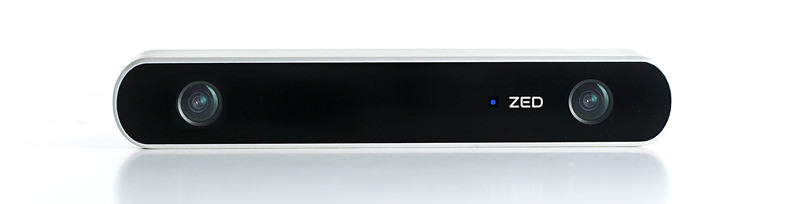
Combined with an unmanned aerial vehicle (drone), a self-driving car, or another robot, the device could give machines the advantage of “human vision,” allowing them to navigate with extreme precision at a price that is thousands or even tens of thousands of dollars less than the price of current technologies.
Today's robots use technologies based on lasers, radar, infrared, or some combination of these to measure distance, recognize objects, and avoid collisions.
The problem is that advanced versions of these detection technologies are very expensive. Google uses laser-based LIDAR technology for its self-driving cars to detect objects. Its system can accurately identify a crosswalk from 100 meters away, but it costs around $60,000. And that's just one of the sensors Google uses in its cars.
Some drones use infrared, a thermal sensing technology also used in night vision, to avoid collisions. But there's a problem: IR sensors don't work well in daylight.
But let's take a look at StereoLabs' camera-sensor called ZED. At first glance, it looks like a dual high-definition camera, and it doesn't seem to be much more complicated than a regular camera. What's not shown is the alignment technology.
"The hardest part is making sure the sensors and optics of the two machines are perfectly aligned," StereoLabs CEO Cecile Schmollgruber tells ZDNet.
“This is practically impossible, even with many hours of effort”
"Of course there are digital stereoscopic cameras, but to date they all have the same common Achilles heel.".
StereoLabs began looking into the problem in 2008. The company started in the film industry.
“Production companies would come to us and say, ‘We have two huge machines that are out of alignment, do you have a solution?’” says Schmollgruber.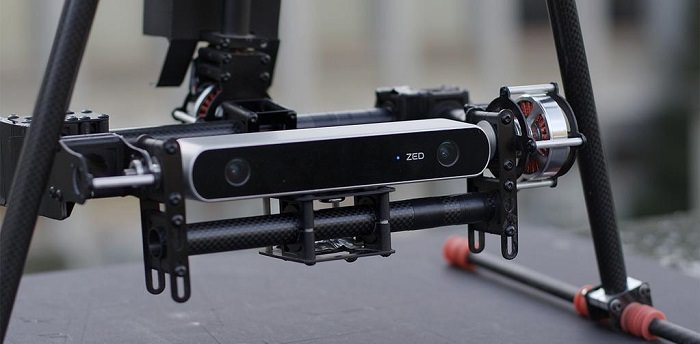
So it seems that StereoLabs found the solution and instead of investing in hardware, which is expensive, it developed software to recognize and manage subtle calibration variations.
Schmollgruber says this would not have been possible a few years ago.
“Computers have evolved so much, and the power of graphics cards and GPUs has reached quite satisfactory levels,” he says, “so the convergence of these things is possible today.”
ZED's first use will likely be in drones. The company is also working with self-driving car developers, but confidentiality agreements keep us from knowing what their plans are and what role stereoscopic technology will play in the future.
This September, however, StereoLabs plans to release 3D scanning applications.
