

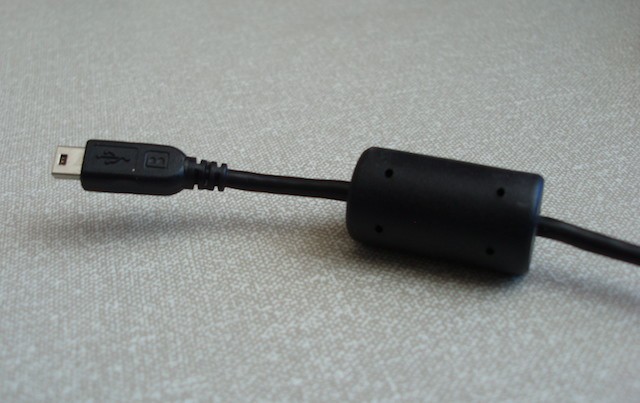
While charging our laptop, we may have wondered many times what that cylinder on the charger is.
Normally such coils are found on the mouse, keyboard, and monitor cables in a typical home or office computer system. You can also find them on power supply cables when a device (such as a printer or scanner) uses an external power adapter.
It turns out that these bumps are called ferrite beads. They can also be called blocks, cores, rings, EMI (electromagnetic interference) filters or chokes. A ferrite bead has the property of eliminating radiated signals and preventing energy inside the charger. This makes the charger much more efficient and helps charge your computer faster. Their purpose is to reduce EMI and RFI (radio frequency interference). This cylinder is responsible for stopping the very large deviation of energy during supply through the cable, as well as the surge of current passing through the cable. Thus, they prevent overloading during charging, helping to achieve better performance for the device. Blocking is most effective when it is close to the source of the EMI, which is why you will find these ferrite beads near the end of the cables.
It also acts as a choke that blocks high-frequency noise in electronic circuits. The ferrite bead binds the conduction of high-frequency currents to a ceramic ferrite to suppress high-frequency noise.
The bead is made of ceramic compounds, made from iron oxide and/or other transition metal oxides. It slides over the wire when you make it or can be placed around the wire in two pieces after the wire is made. The cylinder is encased in plastic – if you cut the plastic, all you will find inside is a black metal cylinder. This metal wire can potentially serve as an antenna by absorbing or releasing any radiation as the current passes around it.
The radiation released by the cables without the bead could cause interference with other electronic objects around them, which act as receivers of this radiation, causing noise in speakers for example.
