

It's a fact that we always complain about the slow speed of our connection and are always looking for better speed even behind walls! However, the Wi-Fi alliance believes it has found the solution, in the form of 802.11ah.
[su_button url=”https://www.secnews.gr/102199/sas-kleboun-wi-fi/” target=”blank” style=”bubbles” background=”#9328c6″ color=”#0404047″ wide=”yes” center=”yes” radius=”20″ icon_color=”#ffffff”]See more: Are they stealing your Wi-Fi? Catch them![/su_button]
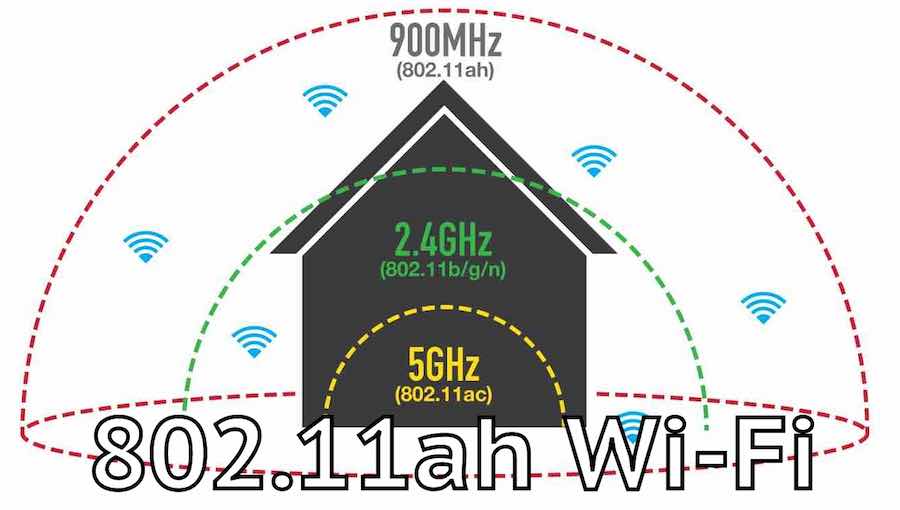
802.11 ah is a different IEEE standard wireless networking protocol that operates in the Sub-one GHz (900MHz) band. The main purpose of the new wireless networking protocol is to provide support for the Internet of Everything (IoE) and also to provide an extended range Wi-Fi.
How does 802.11 ah bypass walls and other physical obstacles?
Today's Wi-Fi standards like 802.11 a/ b/ g/ etc operate at high frequencies, like 2.4GHz and/or 5GHz. Since their frequencies are so high, it becomes more difficult for them to maintain their signal strength as they pass through walls.
Currently, 900MHz is an unlicensed spectrum. At a frequency like 900MHz, which is much lower than the aforementioned frequencies, things like concrete walls, wooden windows, doors, etc. will not be a problem for Wi-Fi access.
[su_button url=”https://www.secnews.gr/99985/the-fi-in-wifi-means/” target=”blank” style=”bubbles” background=”#2873c6″ color=”#0404047″ wide=”yes” center=”yes” radius=”20″ icon_color=”#ffffff”]Read more: Do you know what “Fi” in “Wi-Fi” means? You’ll be surprised![/su_button]
According to the WiFi Alliance, 802.11ah is supposed to cover twice the range of current standards because signal quality doesn't degrade as the signal propagates. Devices also shouldn't have to burn through their batteries sending and receiving signals.
