


guilty of conspiracy to launder money, committing identity fraud and using false information while using US postal services by a US federal court.
The role of the 23-year-old Aleksei Shushliannikov in the criminal organization he belonged to was not significant, but the criminal activity of the organization was relatively large, as researchers found that the young man, with the help of another associate, laundered or intended to launder a sum of money ranging between 400,000 and 1,000,000 dollars.
How the circuit worked
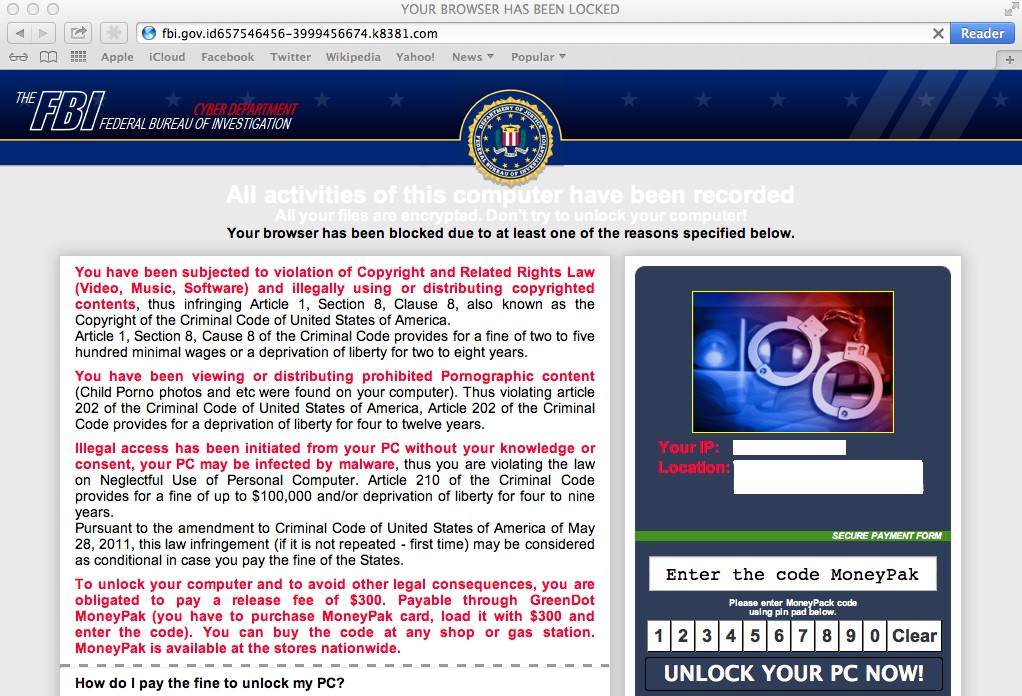
Hackers – many of whom were likely members of the ring – had developed a ransomwarethat locked victims’ computers and demanded a ransom to regain access. The ransom was paid by delivering codes for MoneyPak vouchers, which are a prepaid online payment product that can be used to deposit cash onto prepaid cards.
To increase the success rate of the scam, the criminals used the name of the FBI, and the requested amount of money was requested as a fine, citing the alleged finding of illegal content on the victim's computer.
For the redemption of the coupons and to avoid their seizure, the hackers sold MoneyPak codes to Shushliannikov and his associate, who credited the money from the coupons onto prepaid debit cards of well-known banks, which they had issued using personal information that had been stolen from unsuspecting internet users, via hacking.
For the issuance of the cards, the two collaborators used stolen data, as well as addresses from houses that appeared uninhabited, to which the banks also sent the cards. According to information from the Ministry of Justice, Shushliannikov was looking for houses in Massachusetts and New Hampshire, which were listed for sale, and were ideal for this purpose.
Shushliannikov was discovered while he was removing the mail from a victim's mailbox in New Hampshire, and his GPS linked him to other addresses that had been used for the fraud.
In his apartment, authorities found 246 prepaid debit cards, $26,000 in cash, and a money-counting machine. It appears that, before Shushliannikov's arrest, the two young men had issued about 1,100 prepaid cards.
