

It seems that authorities technically do not need a warrant to monitor cell phones. In recent years, there has been a significant increase in the methods used by law enforcement agencies abroad to monitor and supervise the lives of citizens. In a large number of cases, law enforcement agencies, federal agents and local authorities are trying to obtain information about the cases they are investigating. A very important role during the investigation of all cases is the evaluation of communications via cell phones of those involved.
However, the investigation often encounters the need to declassify communications requested by the authorities in order to obtain the necessary information. Sometimes this is granted, sometimes not, depending on the supervising judge's view of the seriousness of each case.
However, it seems that with the use of high technology, law enforcement authorities are bypassing the need to issue warrants and lift confidentiality and can extract the data from mobile phones they wish in the absence of the relevant official approvals!
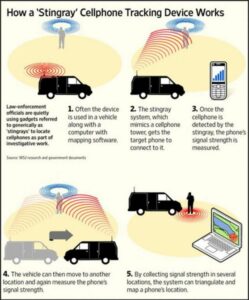
A spying/surveillance tool created by the Harris Corp company called Stingray is what, according to information that has come to light, is now being used by law enforcement authorities.
Stingray is essentially a fake cell phone transmitter that can be placed inside a vehicle and cover an area, monitoring the suspect ( and a host of other unsuspecting citizens ) usually without a warrant or official approval from a judicial authority. Stingray essentially “forces” cell phones in a geographic area to connect to it, replacing the corresponding coverage infrastructure of cell phone companies.
Once mobile phones are connected to the pseudo-antenna, it is possible to monitor incoming and outgoing messages, incoming and outgoing e-mail messages, web browser activity and the ability to monitor conversations.
It has not been clarified whether this requires the approval of mobile phone companies, although as reported in foreign media in Florida, USA, local police officers had proceeded to use the equipment with a simple request for information to the providers. In fact, as revealed, the manufacturer has signed a non-disclosure agreement with all police departments in the USA which expressly prohibits anyone using the device from reporting its use to third parties including other government agencies!! (e.g. judicial authorities).
Stingray can be used to force phones to publish their IMEI, allowing police to match phones to users as evidence of identity. Watch the video :
https://www.youtube.com/watch?v=RAUDnWLnF3k
The company behind Stingray, Harris Corporation, specializes in surveillance devices, with its products being able to be used for denial-of-service attacks on mobile networks, voice monitoring on mobile phones, and more sophisticated tools for tracking people moving in a geographic area.
We list some of Harris Corporation's products below along with indicative prices and capabilities:
- The Triggerfish device allows authorities to secretly monitor cell phone communications. It primarily provides geolocation capabilities and, with the necessary addition, allows for communications monitoring. It can also be used to locate the location where a call was made. It allows authorities to monitor 60,000 cell phones simultaneously. Cost $90,000 – €102,000
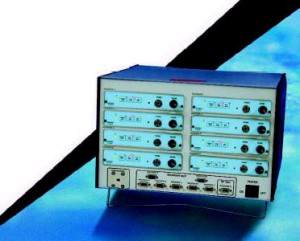
- The Kingfish device allows data to be extracted from mobile phones in a predefined geographical area. The user cannot realize that they are being monitored. It can intercept IMEI numbers, connections between phones (calls). It is controlled remotely via a notebook or Bluetooth. In addition, due to its small size, it can be placed in a briefcase.Price approximately $25,000
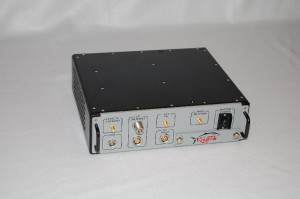
- The Amberjack device is essentially an enhanced mobile phone antenna that allows the tracking and monitoring of mobile phones. It is used in conjunction with the Stingray and detects in real time the signal strength of the phone under surveillance. The device is metallic, is mounted on a police vehicle (magnetically) and is not easily detected with the naked eye. It is even used in moving vehicles by the FBI, DEA, Secret Service and the US Navy. Cost approximately $35,000
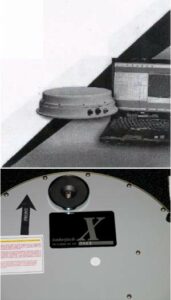
- The Hailstorm device is the most modern that Harris provides to law enforcement agencies. It consists of a standalone unit and has the most sophisticated and complex functions. In some cases, it allows connection to the mobile phone antenna via the Pen-Link software via the Internet to improve target tracking. The cost of the solution reaches $ 170,000 with an additional cost of $ 10,000 for training.
[box_info]The questions that arise are many, mainly regarding the safeguarding of the privacy of persons who happen to be in the same area as the suspect under surveillance, but also regarding the malicious use of the extracted data by corrupt law enforcement officials who may be called upon to use the devices in question.[/box_info]
There has never been a reported case of the use of corresponding devices in Greece or if there is similar equipment in use.
What is certain is that because the judicial authorities have demonstrated in recent years a high level of expertise by training specialized judicial officers in surveillance techniques and cybercrime cases, such an irregular use of equipment would be particularly difficult to impossible to carry out within Greece, without the knowledge of the prosecutorial authorities.
