

Red Hat is warning about a critical CVE-2026-72526 in multicloud-integrations, a component of Advanced Cluster Management for Kubernetes. The vulnerability allows a tenant with permission to create Application resources on the hub cluster to direct deployment to arbitrary managed clusters.

The vulnerability was published on August 12, 2026 and is rated CVSS 9.9. It requires no user interaction and is exploited over a network with low complexity. Red Hat rates it as critical because the attack could impact confidentiality, integrity, and availability.
See also: Critical EoP in Azure Kubernetes Service
How Application resources are affected in multicloud-integrations
The problem lies in the controller that pushes Application Custom Resources from the central hub to the spoke clusters. The process reads the ocm-managed-cluster without sufficient validation. Thus, a user who can create Application resources in the hub has the ability to declare a different managed cluster than the one they should be handling.
The vulnerability is not a simple misconfiguration. It is in the way multicloud-integrations trusts the annotation value before pushing the application. In multi-tenant environments, the boundary between groups can be bypassed, allowing one tenant to target infrastructure belonging to another group or organizational unit.
If the application reaches the targeted spoke cluster, ArgoCD can synchronize manifests controlled by the attacker. In this way, an initial authorization limited to creating Application resources can be transformed into arbitrary code execution or privilege escalation on the affected cluster.
The impact can extend beyond a single namespace. A manifest with elevated privileges or access to internal services could change application behavior, collect secrets, or create new access points. For this reason, auditing should cover both the content of manifests and the cluster that each request declares.
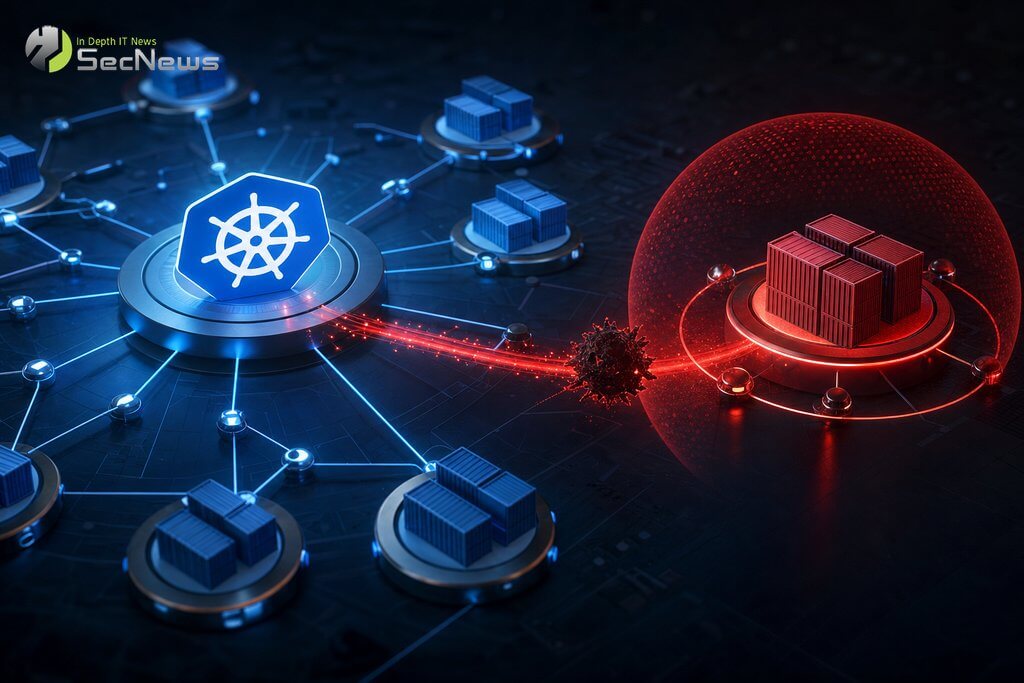
What the critical vulnerability means for Kubernetes infrastructure
The scenario primarily affects Red Hat Advanced Cluster Management for Kubernetes 2 installations that use the related component for centralized management. Red Hat has not yet published a specific version range on the CVE page. As a precautionary measure, administrators should consider previous versions of the affected flows vulnerable until there is clear upgrade guidance.
The attack already requires permission to create Application resources on the hub, so it is not an anonymous remote attack. However, this requirement does not necessarily reduce the risk in shared environments. A compromised tenant account or an overly broad access policy can provide the required starting point.
Cluster management teams should review which users have permission to create Application CRs, restrict policies per namespace, and review recent annotation changes. Pay particular attention to manifests that appear outside of normal deployment paths or request synchronization to an unexpected spoke cluster.
At the same time, it is useful to temporarily maintain stricter approval rules for new applications and enable detailed logging of controller actions. Comparing the logs with the changes in Git and with the expected placement policies can reveal an attempt to bypass before the synchronization is complete.
See also: How to spot suspicious activity on the network

Immediate actions for CVE-2026-72526
's page for CVE-2026-72526does not list a Red Hat Security Errata or specific patch yet. The company recommends upgrading to a supported version that includes the fix, while noting that there is no official mitigation that meets its criteria.
Until an update is issued, the SecNews technical team recommends strict control of permissions on the hub, prohibiting the creation of Application resources by unnecessary accounts, and logging every change in ocm-managed-cluster. Control rules should compare the tenant with the target cluster and reject values that are not provided by the placement policy.
🔒 Protect your privacy with Proton VPN
Swiss VPN from the creators of Proton Mail — strict no-logs policy, strong encryption, and built-in NetShield that blocks ads, trackers, & malware.
- ✔ No-logs, based in Switzerland (except 14-Eyes)
- ✔ NetShield: blocks ads, trackers & malicious domains
- ✔ Covers all devices — free version available
The link is an affiliate link — SecNews may receive a commission at no additional cost to you. It does not affect the independence of our article writing.
See also: How attacks on Redis infrastructure affect the supply chain

Administrators should also check configuration backups and ensure that an unwanted change can be quickly rolled back. Isolating spoke clusters and verifying ArgoCD roles reduces the likelihood of a limited-purpose account gaining broader influence.
CVE -2026-72526 demonstrates the criticality of enforcing inter-tenant boundaries in environments managing multiple Kubernetes clusters. Organizations should monitor upcoming Red Hat announcements, prepare for a controlled upgrade of multicloud-integrations , and treat any unexpected manifest synchronization as high risk.
