

 You can't reveal the world's greatest secrets without betraying your own..
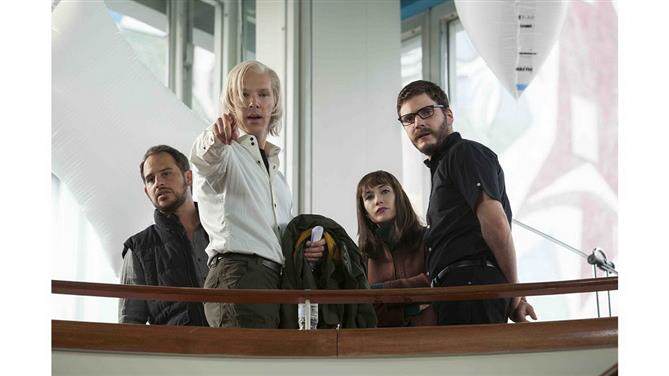
Every generation has a revolutionary figure who can change the game of power and push the boundaries. For some, he is a symbol of hope, for others a dangerous enemy of the state. At the beginning of the 21st century, one such figure, whom some called a visionary and others a traitor, is the Australian Julian Assange. The huge political scandal caused by Wikileaks has inspired the script for one of the most anticipated political thrillers of the year. One of the most talented actors, Benedict Cumberbatch (TV series “Sherlock”, “Star Trek Into Darkness”, “12 Years a Slave”), will play the most talked-about figure of the last two years.
In 2010, a website dedicated to protecting whistleblowers publishes classified US documents, giving a new dimension to the leak of information. Based on true events, the film exposes the deception and corruption of power that managed to turn this unknown website into one of the most talked about in recent years, and its founder into a hero.
The story begins with the mysterious founder of Wikileaks, Julian Assange, and Daniel Domscheit-Berg working together to secretly monitor the world's powerful and privileged. With little financial resources, they create an online platform that allows whistleblowers to publish anonymous data on states and governments. In a very short time, they were able to publish information that even the largest news agencies had not managed to. But when Assange and Berg gain access to the most confidential documents in US history, they will be faced with a crucial question: What is the cost of keeping secrets in a free society - and what is the cost of betraying them?
WikiLeaks deals a powerful blow to the concept of democracy and justice, allowing ordinary people to emerge from the darkness and see the secret actions of governments and corporations that reach the edge of the law. Or did it open the digital gates to reckless revelations that can put people and nations in unpredictable and dangerous situations? These are the questions that lie at the heart of the film without the director trying to give a final answer.
Dates that will go down in history
- December 2006: Wikileaks.org is launched, offering a secure platform for whistleblowers to post classified, sensitive documents while keeping their identities secret. Julian Assange, an Australian former hacker, cryptographer, and internet activist with strong views on freedom and transparency, is appointed as the site's director.
- August 2007: The British newspaper “The Guardian” publishes a front page story about a corruption scandal in the Kenyan government, citing Wikileaks as a source.
- November 2007: Daniel Berg begins working at Wikileaks on a volunteer basis.
- December 2008: Daniel Berg meets Julian Assange for the first time at the Chaos Communications Congress.
- January 2008: WikiLeaks publishes documents showing how the Swiss bank Julius Baer helps its clients launder money. The bank files a lawsuit against WikiLeaks, but later drops it.
- January 2009: Daniel Berg resigns from his job and begins working regularly for Wikileaks.
- July 2010: In collaboration with Wikileaks, the newspapers “The Guardian”, “The New York Times” and “Der Spiegel” publish dozens of articles about US military documents from the war in Afghanistan. The articles provide previously unknown details about the operation and casualties of the war.
- November 2010: An arrest warrant is issued for Assange in Sweden.
- October 2011: WikiLeaks announces it is temporarily shutting down after major banks cut off its funding.
- May 2012: Assange fails to appeal to the English High Court and is ordered to be extradited to Sweden. At the same time, the Ecuadorian embassy in London grants him political asylum, where he remains to this day.
- June 2013: Edward Snowden, a 29-year-old consultant for the US National Intelligence Agency (NSA), leaks highly sensitive information about US spying and surveillance programs. Wikileaks offers him legal support.
Source: fthis.gr
