

co-founder and CEO Matthew Princeis sounding reassuring about the possibility of cyberattacks from Iranas geopolitical tensions with the US escalate. Against the backdrop of Operation Epic Fury and growing concerns about retaliation in the digital realm, Prince assures that the US cloud infrastructure giant is fully prepared to absorb and repel any offensive action.
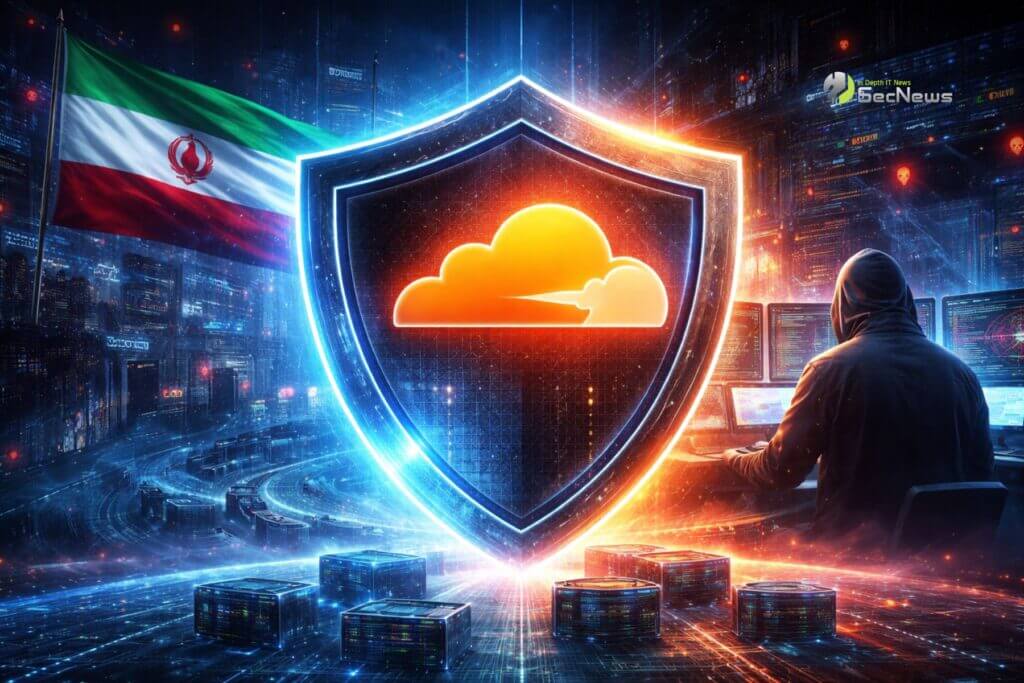
In a public statement on Platform X, the company's head emphasized that Cloudflare has in-depth knowledge of the techniques used by Iranian groups and is not concerned about the potential destabilization of its services. He specifically stated that no matter what happens, the company is ready to defend its customers without interruptions or loss of availability.
The placement is not accidental. Cloudflare is one of the world's most important internet infrastructure providers , acting as an intermediary between visitors and servers. According to data it published for 2024, approximately 20% of the world wide web will be transported through its network, making it a critical hub for the stability of the internet.
Cloudflare uses a network of authorized distributors and partners to deliver security, performance, and zero-trust solutions to resellers and end users. These distributors offer technical expertise, training, and support, helping partners expand their service offerings, increase revenue, and access the full portfolio Cloudflare product. For the Greek market distributor is the Trust-IT.
See also: US-Israel and Iran exchange cyberattacks
Concerns about digital retaliation and DDoS attacks from Iran
Prince's comments come as security analysts have seen increased activity by groups allegedly linked to Tehran. According to a Reuters report, Iranian circles are encouraging pro-Iranian hacker networks to take action, using techniques such as DDoS attacks and "hack-and-leak" operations, in which systems are breached and stolen data is released.
Adam Meyers, a senior fellow at CrowdStrike, said that activity is already being recorded consistent with threat actors aligned with Iranian interests. He noted that these groups are conducting target reconnaissance and test DDoS attacks, attempting to map vulnerabilities in US and Israeli infrastructure.
At the same time, cybersecurity firm Anomali notes that groups allegedly backed by the Iranian state had already launched “wiper” attacks against Israeli targets before the recent escalation. These attacks are not limited to intercepting data, but aim to permanently delete it, causing operational paralysis.
See also: Iranian Cyber Front: Increased activity by hacktivists

Targets: From military providers to energy infrastructure
Cyberattacks are not limited to state organizations. Iranian groups have reportedly targeted military contractors U.S. and Israeli, and there have been reports of disruptions at gas stations in Jordan. This pattern suggests a strategy of pressuring critical infrastructure and supply chains, with the aim of causing social and economic disruption.
In this environment, companies like Cloudflare are called upon to act as the first line of defense. The ability to absorb a huge volume of malicious traffic and the geographical dispersion of its data centers are critical advantages in cases of mass attacks.
The attack on the BadeSaba app and the message to the regime
In addition to state and military targeting, the digital front also includes symbolic attacks. During the joint US-Israeli operation, the popular Iranian religious calendar app BadeSaba was hacked, as were several news websites. The attackers posted messages calling on the Iranian armed forces to lay down their arms, attempting to damage morale and send a political message.
See also: AWS data centers: Drone attacks caused extensive damage
🔒 Protect your privacy with Proton VPN
Swiss VPN from the creators of Proton Mail — strict no-logs policy, strong encryption, and built-in NetShield that blocks ads, trackers, & malware.
- ✔ No-logs, based in Switzerland (except 14-Eyes)
- ✔ NetShield: blocks ads, trackers & malicious domains
- ✔ Covers all devices — free version available
The link is an affiliate link — SecNews may receive a commission at no additional cost to you. It does not affect the independence of our article writing.
BadeSaba, with over 5 million downloads, is considered particularly popular among Iranian regime supporters. Its targeting highlights that cyberwarfare is not only about critical infrastructure, but also platforms with high symbolic load and social influence.

Cyberspace as a field of geopolitical conflict
The US-Iran standoff confirms that cyberspace has become a key arena for the exercise of power. DDoS attacks, data leaks , and destructive malware are now tools for strategic pressure with lower political costs than a conventional military move. In this environment, the resilience of digital infrastructure and the preparedness of companies like Cloudflare will largely determine how painless or painful the next phase of the conflict will be.
