

As we understand it, artificial intelligence has become a fundamental factor in cyberspace. The way organizations and their adversaries approach cybersecurity is significantly influenced by it.
Organizations must prevent incidents and breaches to the best of their ability, while threat actors continue to adopt criminal practices.

“Good AI”: Strengthening Cyber Defense
First, it’s important to look at the positives to understand how organizations can effectively protect themselves. For example, organizations that implement AI as a preventative measure have made significant progress in identifying new cyber threats. By analyzing large data sets, these solutions use machine learning to identify attacks. This capability is proving particularly effective in detecting complex threats that traditional security systems might miss, such as polymorphic malware or sophisticated ransomware strategies .
See also: Artificial intelligence: Reproduces the voices of mass shooting victims
AI’s ability to respond quickly is undoubtedly a game-changer for businesses everywhere. Upon detecting a threat, AI clusters can immediately trigger protocols to isolate and respond to risks, significantly reducing the time to a potential attack. This includes automatically patching vulnerabilities, isolating compromised systems, and even responding to ongoing attacks.
“Bad AI”: Helping Cybercriminals
In fact, cybercriminals are leveraging AI to conduct more sophisticated attacks, including enhanced social engineering strategies. “Bad AI” detects communication patterns and creates convincing phishing emails. These AI-generated messages are increasingly difficult to distinguish from legitimate communications, causing concern among security teams. In addition, advanced AI can detect vulnerabilities in systems and automate the process of exploiting them. These tools can perform complex tasks, such as cracking passwords and exploiting zero-day vulnerabilities, at speeds that exceed traditional limits. One of the key issues here is the ability of cybercriminals to attack industries with minimal effort.
In a much broader social context, the ability of artificial intelligence to generate text, images and videos is being used to create fake online profiles, websites and news articles with the aim of influencing public opinion, even being able to determine a citizen’s opinion on their vote in elections. With national votes to be held in many countries around the world in 2024 — including the US and the UK — AI’s intention to influence the public unchecked is emerging.
The continuing role of human supervision
When discussing the impact of AI on cybersecurity, it is easy to overlook a fundamental factor – that human oversight will continue to play a vital role in protecting networks and data. Central to this is the need for technology users to stay informed about the changing nature of security risks in order to remain vigilant.
Read more: How does artificial intelligence facilitate the medical sector?
Even as detection systems evolve, the risks of human error remain. In such cases, technologies that unite users and networks to prevent attacks, such as those provided by file-based malware, become increasingly important to counter “bad AI” and support human oversight.
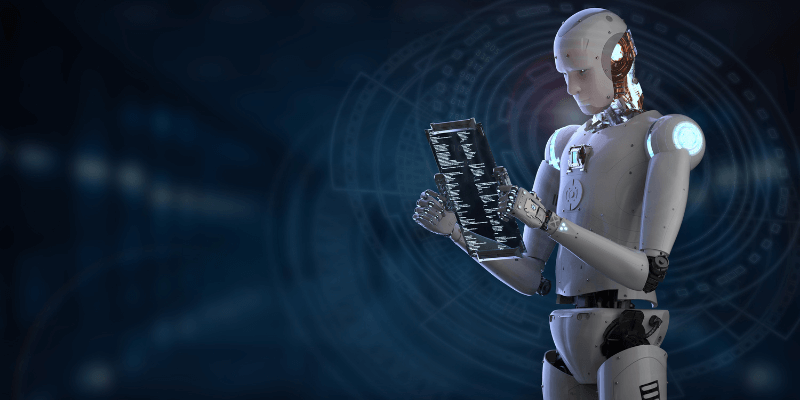
With all of this in place, the next 12 months promise to be an exciting and highly demanding period for those involved in cybersecurity. Those who can provide high levels of protection will have the opportunity to stay one step ahead of the risks as artificial intelligence continues to evolve.
🔒 Protect your privacy with Proton VPN
Swiss VPN from the creators of Proton Mail — strict no-logs policy, strong encryption, and built-in NetShield that blocks ads, trackers, & malware.
- ✔ No-logs, based in Switzerland (except 14-Eyes)
- ✔ NetShield: blocks ads, trackers & malicious domains
- ✔ Covers all devices — free version available
The link is an affiliate link — SecNews may receive a commission at no additional cost to you. It does not affect the independence of our article writing.
Source: forbes
