

On Friday, New York became the first state in the United States to introduce a vaccine verification app (often referred to as a digital vaccine passport), which citizens will use when going to events or other places to prove they have received the COVID-19 vaccine or have recently tested negative . It is ’s Excelsior Pass IBM app , which is based on blockchain and displays a personalized QR code to verify health status. The state tested the app earlier this month. Vaccine verification apps could be a significant help in the process of returning to normal.
Learn more: Excelsior Pass: The first digital vaccination passport in the US

However, the companies behind them will first have to convince millions of Americans that these apps are not a privacy risk.
In his announcement, Governor Andrew Cuomo promised that the Excelsior Pass “will keep personal information safe.” Similarly, Steve LaFleche said that New York’s digital passport is based on a “flexible and accessible tool that puts security and privacy.”
But, it seems, not everyone is convinced. “Some of these everyday applications will create a new layer of digital infrastructure that was previously anonymous,” said Albert Fox Cahn, founder and director of the Surveillance Technology Oversight Project. “You don’t need this type of surveillance to pick up a quart of milk from a store.”
One of the most important privacy questions that arises is whether these vaccine verification apps will collect and store location data and medical information, and if so, who will have access to that data. The companies behind these apps have said they won't store data, but that doesn't convince all Americans.
See also: FTC: 'Vaccine research' scams target patients
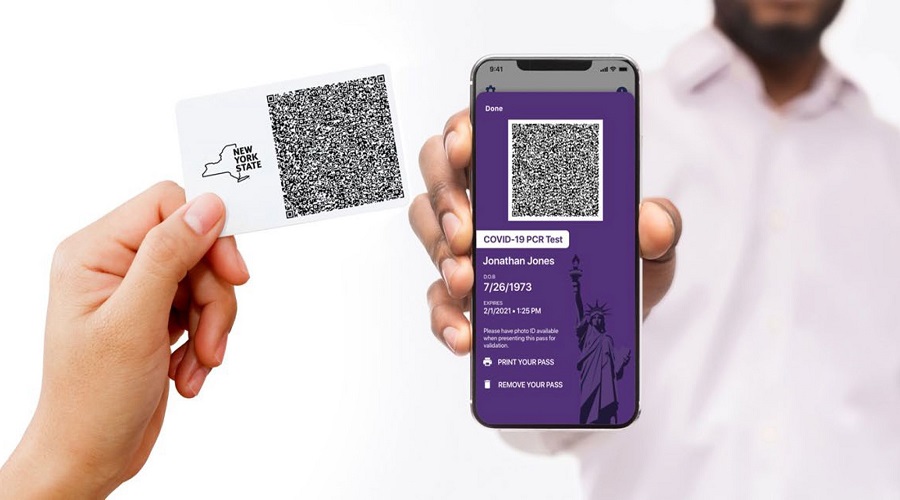
“trust is paramount for digital health smart cards to be used by individuals to prove vaccination status as society reopens,” said Dr. Brian Anderson of the nonprofit MITRE. “That’s why it’s imperative that companies are transparent about privacy policies so that individuals can decide whether and with whom they want to share their vaccination information.”
Silicon Valley has tried its hand at tech solutions to help address the public health crisis, but those efforts have largely failed. Now, it's thought that vaccine verification apps could help reopen the U.S. However, as we said above, privacy concerns abound.
See also: Biden: All adults to be eligible for COVID-19 vaccine by May 1
Apple currently provides notifications to provide more transparency about the data apps collect. Other tech giants, such as Facebook, continue to offer new tools to gain consumer trust after a series of data breach scandals.

Similar privacy concerns exist in other countrieswhere digital vaccine passports have been introduced. The vaccine certificate program endorsed by the State of Israel is under scrutiny not only for draining smartphone performance and memory, but also for being closed-source, so it is unclear where some of the data will be transferred. In Singapore , there was also a backlash when law enforcement authorities gained access to personal data collected by contact tracing apps. Authorities gained access to conduct criminal investigations, but that does not change the fact that citizens’ data was breached, despite assurances of privacy protection.
Source: CNN International
