

Apple Wednesday won its legal battle against the European Commission, and the dispute over paying €13 billion in Irish taxes.

In a long-awaited landmark ruling, the EU's general court ruled that the European Commission failed to prove that the US tech giant was given an advantage by the Irish government.
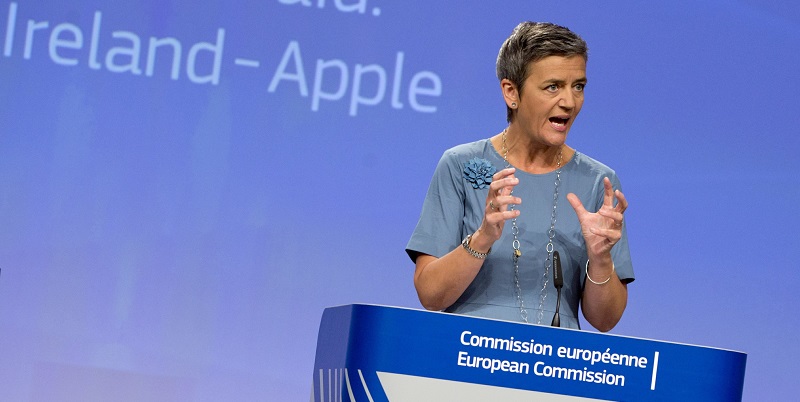
The Commission, the EU's executive arm, concluded in August 2016 that the Irish government granted illegal benefits to the company and demanded it recover €13 billion in unpaid taxes.
At the time, the Commission said that Ireland had allowed Apple to pay “significantly less tax than other businesses for many years,” which meant the US company was able to pay a 1% tax rate on its European profits in 2003, which was reduced to 0.005% in 2014.
The Irish government and the American company have decided to appeal the Commission's decision, with the latter arguing that the tax repayment order "defies reality and common sense."
Ireland, Apple and the European Commission have two months to decide whether they want to appeal the latest court ruling, and potentially refer it to the EU's highest court.
In response to the court ruling, the Irish government said on Wednesday that it had always been clear that “there was no special treatment of the two companies” and that “the amount of Irish tax was charged in accordance with the tax laws.”
The European Commission said itwould “continue to examine aggressive tax planning measures under EU state aid rules to assess whether they lead to illegal state aid.” It added that itwould “carefully study the issue and consider possible next steps.”
The Apple case is particularly significant and has been at the center of the EU's crackdown on tax in recent years. It could influence how the Brussels agency deals with other companies in similar matters.
Taxation has an even more important role after the Covid-19. While many governments increase their spending, they will be looking for new sources of revenue in the form of taxes.
In this context, there is an ongoing debate about whether the European Union should have its own digital tax, a levy from the big tech giants to ensure they pay a fair share compared to smaller businesses.
"We thank the General Court for its time and consideration of the facts. We are pleased that they have dismissed the Commission's case," an Apple spokesperson told CNBC.
Following the news, shares rose about 1.2%.
Arancha González , Spain's foreign minister, told CNBC's " Squawk Box Wednesday ": " Whether the companies are American, whether they are Chinese, Japanese, Korean or European, this is about fair taxation ."
