

According to the latest edition of the Kaspersky Lab Security Bulletin, the volume of spam emails in 2015 decreased, reaching 55.28% of the total email volume. Overall, there was a decrease of 11.48% compared to the previous year. The notable drop in spam emails can be attributed to the growing popularity of legitimate advertising platforms on social media, coupon services, etc.
Among other things, Kaspersky Lab's spam report notes some significant trends. Over three-quarters (79%) of all emails sent were less than 2kb in size, indicating a steady decrease in the size of emails used for spam campaigns in recent years.
Financial institutions (e.g. banks, payment systems, and even online stores) were the most frequently targeted by phishing email attacks (34.33% of all attacks, an increase of 5.59%).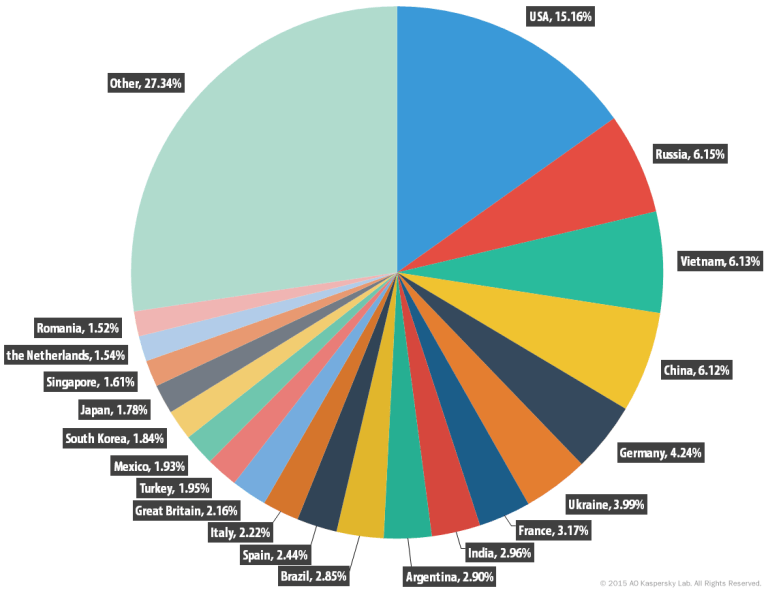
In 2015, cybercriminals continued to send fake emails from mobile devices and notifications from mobile applications containing malware or advertising messages. Among the new tactics used by scammers was the spread of malware in the form of .apk (executable files for Android devices) and .jar (ZIP files containing programs in the Java language).
Additionally, cybercriminals hid a portable encryption Trojan behind a folder containing Flash Player updates. Upon installation, the malware encrypted images, documents, and video files installed on the device, and then users received a message informing them that they had to pay money to decrypt the files.
“The increased use of mobile devices in our daily lives, for tasks such as exchanging messages and data or accessing and controlling our bank accounts, has led to an increase in exploitation opportunities for cybercriminals.
" Mobile malware and fraudulent spam are becoming increasingly popular, and attempts to deceive victims are evolving year by year, with the emergence of applications that can be used by cybercriminals both directly (to send spam and malicious spam) and indirectly (via phishing emails). Therefore, mobile device users should be on the lookout and remain vigilant, as cybercriminal activities are likely to increase as our dependence on mobile devices increases," warns Daria Loseva, Spam Analysis Expert at Kaspersky Lab.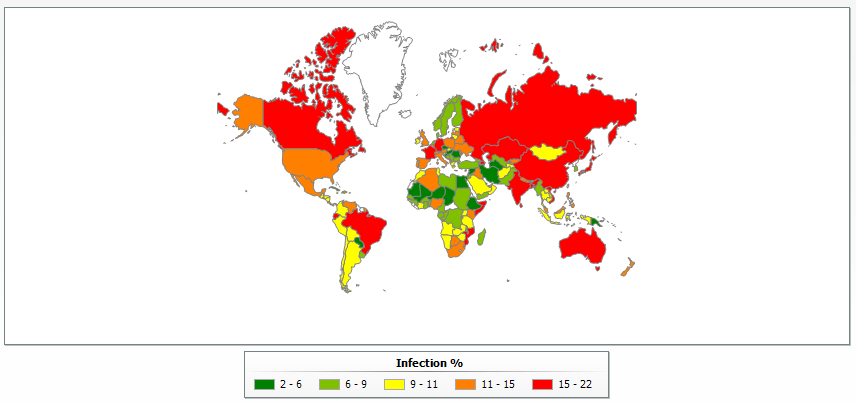
The US remained the largest source of spam (15.2%), with Russia in second place (6.15%) and Vietnam (6.12%) overtaking China to move into third place. Germany was the worst-hit country, accounting for 19.06% of all spam attacks, up 9.84% from 2014.
Brazil follows with 7.64% (+4.09%), which was second on the relevant list, while it was in sixth place in 2014. Russia rose to third place on the list from eighth, with spam attacks increasing by 3.06%, reaching 6.03% of the overall total in 2015.
The main themes of spam attacks
Although there is still some time until the Olympic Games in Brazil, scammers have already started to exploit this issue. Specifically, they are sending emails announcing that recipients have won relevant draws, asking them to fill out a form with their personal information. In these attacks, the emails with attached pdf files, images and other graphical elements are designed to fool spam filters.
Financial scams such as the “Nigerian scam” used topics such as the political situation in Ukraine, the civil war in Syria, the elections in Nigeria, and the earthquake in Nepal to exploit the kindness and sensitivity of recipients. The content of these messages appealed for material support for a person in need.
More information about the spam and phishing landscape in 2015 is available on the Securelist.com.
