

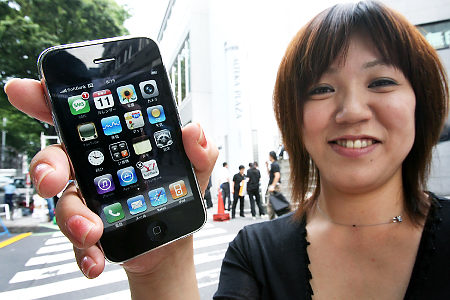
Do you remember when the iPhone was first released in Japan, many condemned it and said that it would never catch on as a product in that country, prejudging its sales and reducing it to a disastrous failure for Apple?
The truth was that although those views were stupid at the time, the iPhone initially did not do well in Japan, even troubling Steve Jobs, since the country in question is the number 1 market for gadgets and new technologies.
What no one at Apple expected was that the fate of the iPhone would change, and so quickly, because of a factor they had never imagined. Who was it? Women.
Fortune today has a very good article about how the iPhone managed to emerge victorious in the Japanese market and how the country's women helped and even catalyzed it.
“The iPhone was a huge success for the female population of the country. Women embraced it from the very beginning and the iPhone 3G soon became a symbol of the country's fashion. The fact that they could add imaginative cases and change its appearance at will helped even more to make the iPhone their favorite gadget in a very short time. In Japan, competition was fierce and providers never imagined that Apple's mobile phone, which had only the essentials in terms of services, could compete with the country's devices at the time, which had everything from e-wallets to TVs.”
First, he says, you have to understand what a colossal and unexpected hit the iPhone was with Japanese women. "The iPhone has been very strong among women from very early on. The original round plastic iPhone 3G series soon became a fashion item for Japanese women who also enjoyed the huge variation of cases and ease of decoration. Then there is the brand loyalty of Japanese women."
Japan had phones just as good-looking as the iPhone. The once popular Infobar candy bar phone even won international design prizes. But the craze for the iPhone, despite lacking all the bells and whistles Japanese telecoms executives thought were indispensable (e-wallet, TV, etc) proved overwhelming.
An important role in the rise of the iPhone was also played by Apple's decision to go against the trend of other companies such as Nokia and Samsung, which customized the software of their devices per provider, and thus the same models were released with different software. The iPhone remained with the same software, independent of contracts and providers, and this was something that people particularly liked.
Let's not forget that Steve Jobs had emphasized several times that software, software if you prefer, will always be more important than the hardware of a device.
"As Steve Jobs once said, Japanese manufacturers' biggest mistake is they didn't realize how important software technology has become. Most of the executives at Japanese consumer electronics manufacturers were hardware engineers, and they don't get the importance of software or how software business works." he says.
Dimitrios Georgoulas @ GreekAppleNews
