

eHighway: The first electric highway in Sweden – Siemens is developing the first electric highway (eHighway) in Sweden with the ultimate goal of the country achieving transportation independence from fossil fuels by 2030.
More specifically, Siemens will install an overhead contact line system for hybrid truck vehicles in Sweden. The project was assigned by the Swedish Transport Administration to the County Council of Gävleborg.
The aerial contact line system will power a two‑kilometre section of the E16 highway north of Stockholm as part of a pilot project. Test results will be available two years after the project starts operating, aiming to demonstrate the system’s suitability for future commercial use. Sweden has set ambitious climate‑change goals. The main goal is for the transport sector to become independent of fossil fuels by 2030.
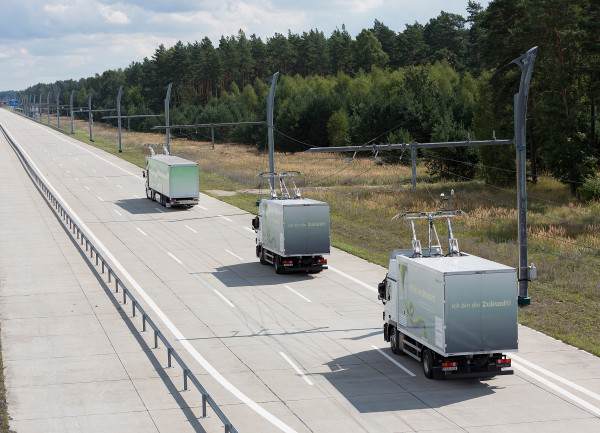
“The electric highway is twice as efficient as internal combustion engines. This means that not only is energy consumption halved, but air pollution is also reduced,” said Roland Edel, Chief Technology Officer of Siemens’ Mobility Division. “Electric hybrid vehicles are the first step towards fully electric vehicles, which will play an increasingly important role in the development of sustainable freight transport,” he added.
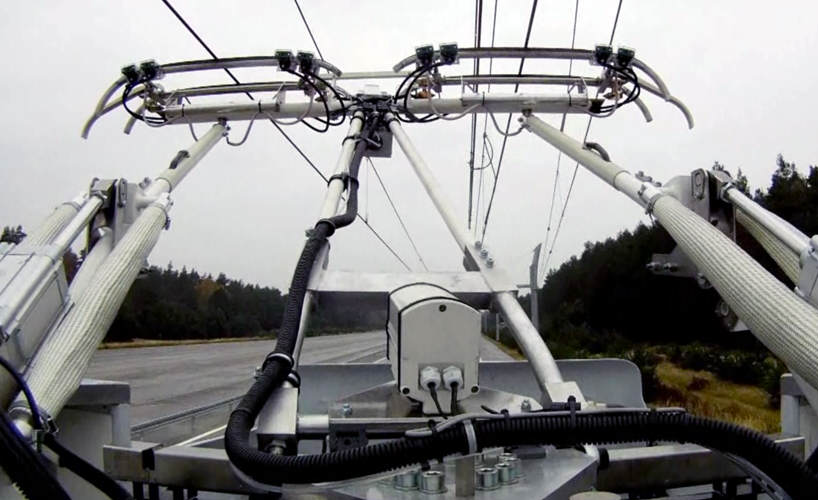
At the core of the system is an intelligent pantograph, combined with a hybrid motion transmission system. A sensor system allows the pantograph to connect to the aerial contact line system and to disconnect automatically at speeds up to 90 kilometers per hour.
Trucks equipped with this system draw energy from the overhead contact line while they are moving, which allows them to move efficiently, with zero emissions. On roads where there is no overhead contact line infrastructure, the vehicles will be able to use a diesel hybrid system. Alternatively, the system can operate, for example, with compressed natural gas or batteries.
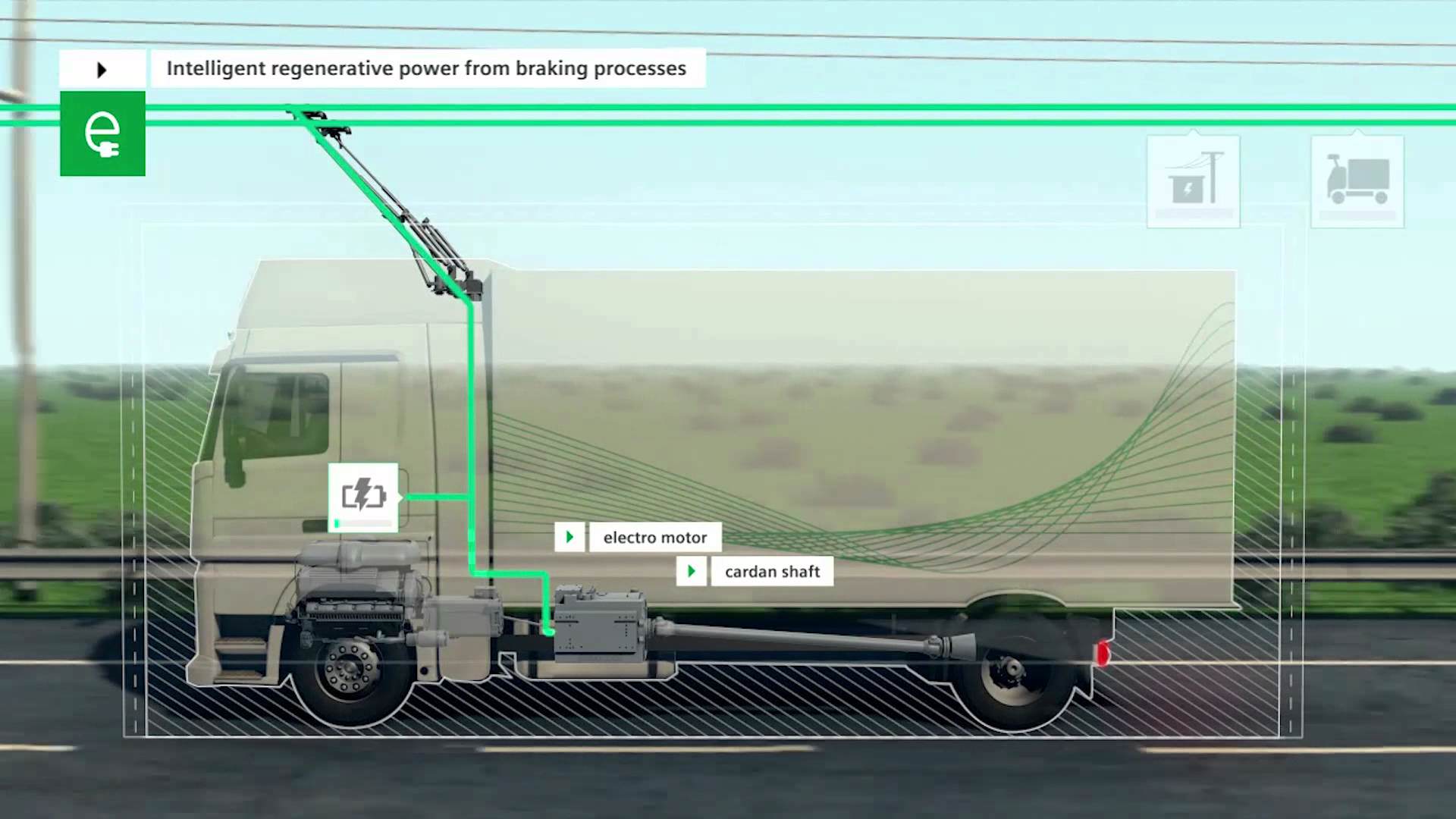
«The electric highway (eHighway) that Siemens is developing combines the proven technologies applied to railways with the flexibility of road transport», said Jan Nylander, head of the project for the County Council of Gävleborg. «In combination with Scania's hybrid technology, fuel consumption and emissions will be reduced, while the intelligent omniscient ensures that the vehicles that will travel on the electric highway will be as flexible as conventional vehicles», he added.
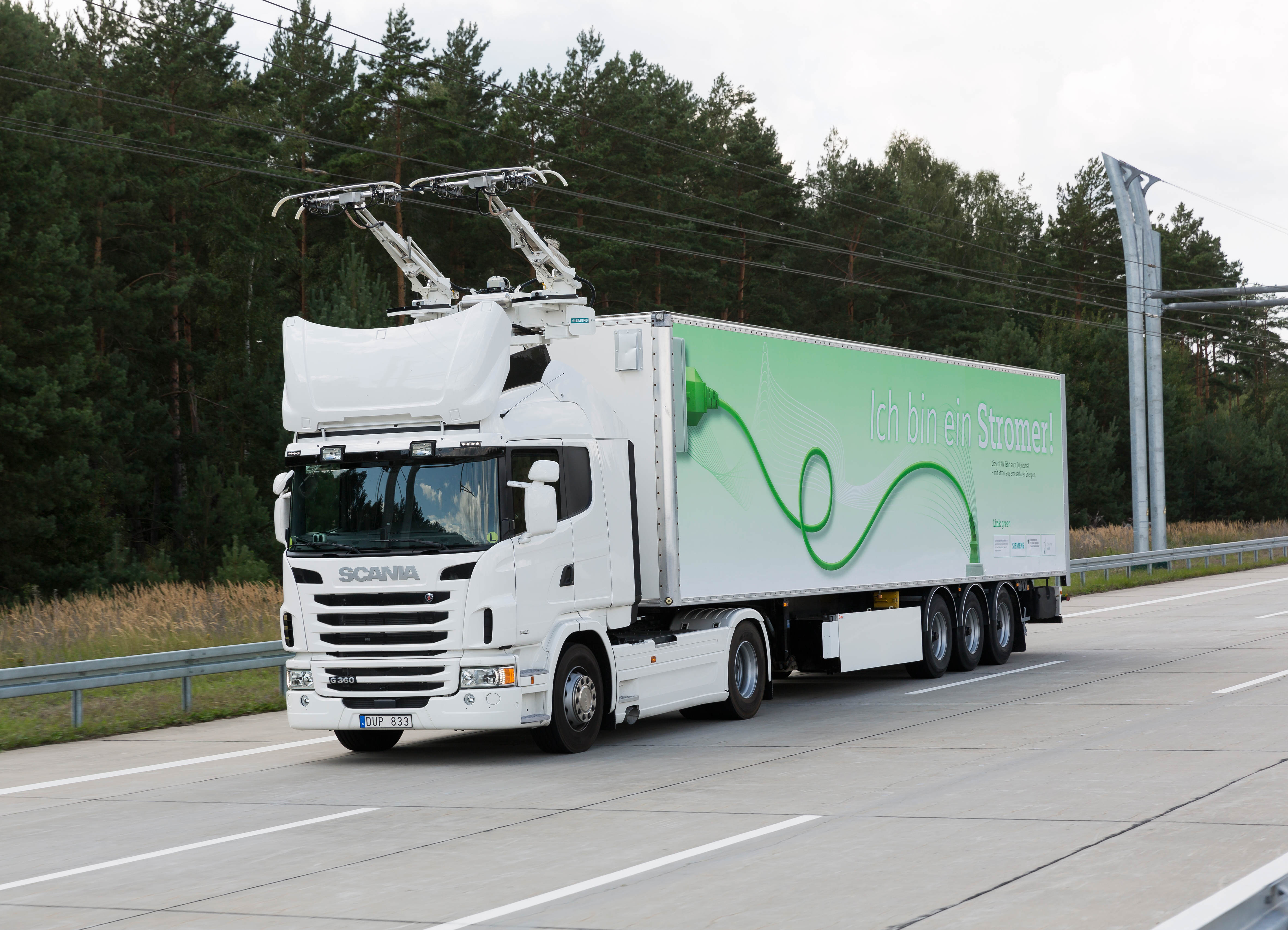
The pilot project will be implemented on the E16 highway, which connects the regions of Dalarna and Gävleborg, which are industrial areas where steel, pulp and mining industries operate, with the port of Gävle. During operation, two vehicles will be used. These will be electric hybrid vehicles manufactured by Scania and will be adapted, in cooperation with Siemens, to operate within the framework of the aerial contact line system.
Meanwhile, in California, Siemens is working with Volvo and local truck body companies on a pilot project for the South Coast Air Quality Management District (SCAQMD).
The project examines how different truck chassis configurations interact with the electric highway infrastructure that has been installed in the area bordering the ports of Los Angeles and Long Beach.
Source: pestaola.gr
