

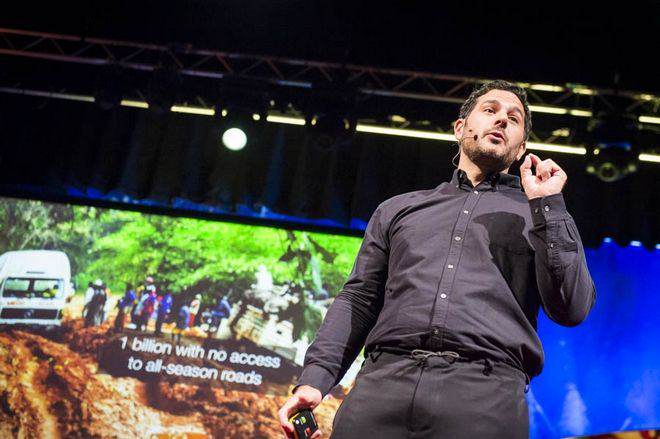
Ideas can change the world much more easily when they meet technology. Andreas Raptopoulos and Matternet's small-scale aerial vehicles (drones) aim to improve the lives of a billion people in the developing world….
It's certainly not easy, as, as a new technology that not many people know about, drones are treated with caution.
There is a fear of them, as has happened with the introduction of any new technology. Matternet, starting from the developing world, where conditions are more favorable, is trying to solve chronic problems in health and transportation, which has made it, as Andreas Raptopoulos argues in Fortune, “the most beloved technology company on the planet.” After all, those who know it have it in their minds as a company that wants to save the world and attempts to bring about a technological revolution similar to that of mobile telephony.
What do you think makes drone technology so important?
In my opinion, it is the greatest technological invention in the field of vehicles since the appearance of the internal combustion engine. It is an aerial vehicle that at a level of 90% has hardware and software that you find on a computer or a smartphone, while its interface with the real world is through the eight rotating propellers. We are talking about a particularly low cost, which can massively change the form of vehicles in the 21st century. It essentially paves the way for digital vehicles. On the ground level, the beginning has been made by Tesla and in the air, one of the pioneers in this technology is Matternet.
Why did you start in the developing world and not in a developed country? The strategy of approaching a market is the key ingredient that makes a company successful or not. It is in Matternet's DNA to want to be the best company doing this job on the planet. We operate in a sector that is completely dependent on air traffic control authorities not only here in America, but also around the world. What we diagnosed is that it will take a long time in America to open the airspace to these types of vehicles. However, the technology will have to evolve further in real conditions, so that those who make the regulations can be convinced that it works safely and, at the same time, any fears that citizens have about small-scale aerial vehicles can be overcome. Thus, we considered that the best way to bring this product to market is in places where there is significant growth potential, such as countries in the developing world, where road infrastructure does not exist, but also where the authorities are more "open", due to the conditions.
When do you think the problems with the authorities will be resolved?
There is a general movement in America, and globally, to fully automate the air traffic system. Computers are designed to solve such problems, and I assume that we will head there sooner or later. The US has already designated seven areas as test sites for drone technology, and we have a presence there with other companies to perfect our technology. In other countries, such as the United Arab Emirates, which has a single airspace control authority, things seem to be moving more quickly. The government of Dubai has already announced its interest in transporting government documents using drones; it is a market in which we have made some contacts.
How does the real market perceive your technology?
We have met with e-commerce and courier companies and they have understood that our application will dramatically change the way they operate. For example, in transporting a package from Silicon Valley to Athens, about half the cost of this entire logistics chain concerns the last stage, that is, from the sorting center somewhere in Attica, to the door of the recipient's house. Our technology is here to automate and dramatically reduce costs in this area. In fifteen years, most transports that will be made in a city like Los Angeles will not be carried out by courier, but by automated vehicles, road or air. The reason for this is mainly economic. For example, Amazon is pressuring all its transport partners to compress costs in the last stage of delivery, with the aim of further reducing the price of the product to the consumer. Its move to announce that it is considering entering the drone market is linked to this effort.
Can this specific technology be applied in Greece?
Of course, it also has application in Greece, which is ideal due to its uniqueness. For example, from the base of Pelion to a mountain village or between two nearby islands, parcels or medical aid can be sent. When there is an impossibility of solving a problem with the existing available practices, small-scale aerial vehicles are the first appropriate way to solve it. And in Greece, as in many countries around the world, we are examining how we can develop. We are already in discussions, at a very early stage, with a group in northern Greece, for the transport of diagnostics to the Thrace region.
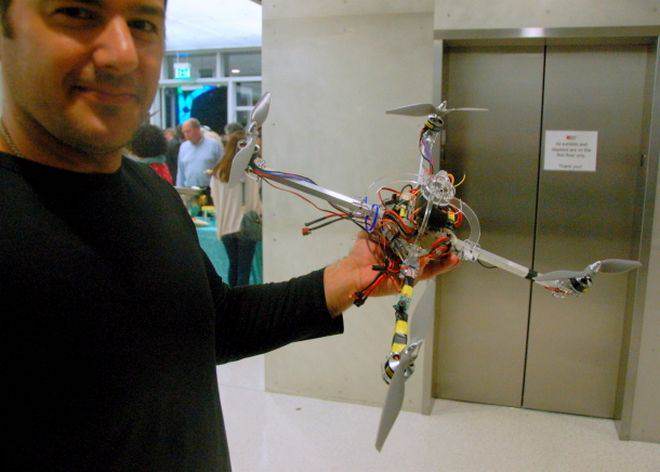
In how many years do you think you might open the back door of your house and find a package delivered to you by Matternet?
I believe that in the next ten years I will receive a package through this technology. However, I do not believe that it will come to my balcony, to my door or to my garden. It will come to a very close location, e.g. to a cooperating supermarket in the neighborhood along with a message that will give me the options of whether I want it to be brought to my home or if I will come to pick it up. I think that it will still take a long time for the technology to understand the obstacles that exist in the backyard of a house, where there may be a dog or a child playing.
What would you like Wikipedia to write in 50 or 100 years under the entry "Andreas Raptopoulos – Matternet"?
I would like to be credited as one of the key people who started this new transportation technology, in the same way that Ford might be credited with mass-produced cars. Usually when something big happens, there are several "fathers," for example, the internet doesn't have one father, it has several. The same is true of our own technology. My part has to do with the vision I had of how small-scale aerial vehicles could be used to change the world and do what mobile telephony did to telecommunications. History is written by the winners. If we don't make it, I hope I'm at least a footnote, but I think we'll move forward and Matternet will have its rightful place in history.
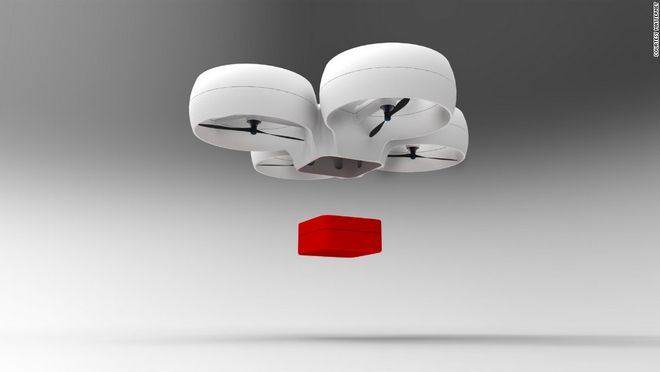
No roads? – No problem
With proven experience from earthquake-ravaged Haiti to Lesotho in
South Africa, Matternet’s octocopters have proven that the purpose for which they were created, namely to provide solutions and bring development faster to countries with extreme poverty, is entirely feasible. How do they work? It is a “physical internet” that resembles a network of mobile phone antennas. The drones, which are about the size of a shoebox, start from a base, e.g. a hospital, transporting medicines, which must reach as soon as possible, to a remote and isolated health center, in a mountainous area, 30 km away. Equipped with GPS, they will fly to the next supply point 10 km away, automatically change batteries and continue to the final destination. They have the ability to transport loads of around two kilograms, while the autonomy between refueling is constantly improving and now exceeds 20 km. It is noteworthy that this is the most economical and ecological proposal for transporting goods, as the cost of transporting a package over a distance of 10 km does not exceed 0.20 euros, with an almost zero environmental footprint.
From Byron to Palo Alto
Andreas Raptopoulos was born 40 years ago in Athens and is a child of public education. He completed his basic education at Byronas and continued at the University of Patras, where he studied mechanical engineering and aeronautical engineering. He graduated first in his year and with a scholarship from the Goulandris Foundation and, subsequently, from the Onassis Foundation, he continued his studies in Great Britain, at the Royal College of Arts. There he created his first technology, which transformed noise into music. This technology soon became a company, FutureAcoustic, whose rights he sold at the age of just 26 to the American company Herman Miller. In 2011 he will be the first Greek to be accepted into Singularity University in the USA. At this particular NASA campus, co-founded by the "brilliant" Greek-American Peter Diamantis, teams of scientists work to find technological ways to address humanity's problems. That's where Matternet took shape, with Andreas as its CEO, who left London behind in mid-2013 and moved permanently to Palo Alto and Silicon Valley.
Source: news247.gr
Source: planet-greece.blogspot.com
