

Apple ’s strategic investment in artificial intelligence and industrial automation is now having a tangible impact on the American manufacturing base. The recent gathering of hundreds of companies at the first Apple Manufacturing Academy Spring Forum , held in East Lansing, Michigan, confirmed that the American technology giant’s ambitious program is becoming a key driver of transformation for the industry.
The initiative, which began in 2025 in Detroit, was created with a clear goal: to equip the American workforce with the skills needed in the new era of smart manufacturing. Through a collaborative model between Apple, academic institutions and businesses, the Academy aspires to bridge the technology gap observed in industrial production.
See also: Apple asks Supreme Court to stay Epic Games case
The practice behind the theory
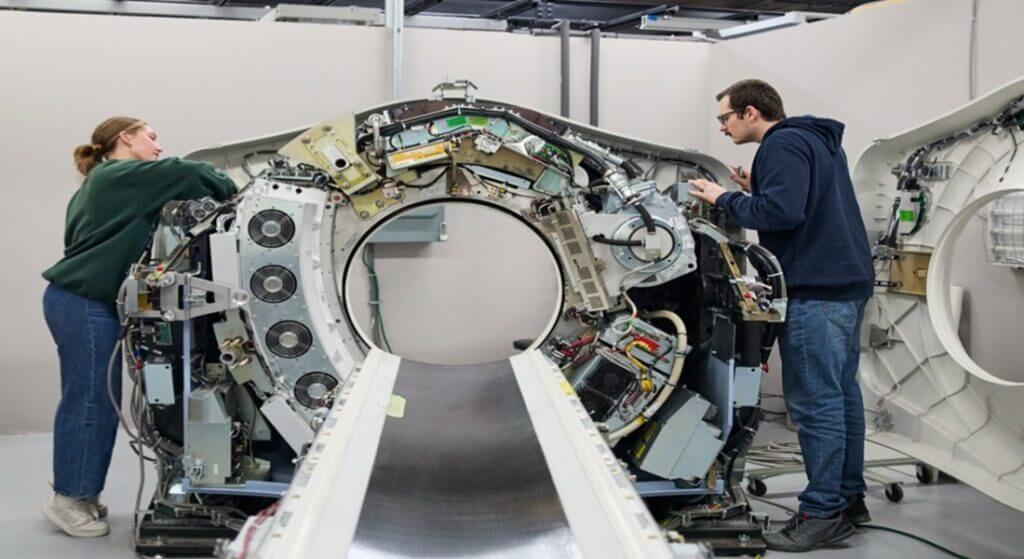
The success of the program is reflected in real business examples. Among them, Block Imaging, a company that operates in the maintenance and remanufacturing of medical imaging equipment, stands out. During the forum, its facilities served as a reference point for participants, who had the opportunity to see how the use of AI solutions can transform the operation of a factory.
According to company executives, the training provided by Apple engineers and experts from Michigan State University provided immediately applicable tools. The adoption of automation techniques, better analysis of production data and optimization of processes resulted in increased efficiency and faster customer service in the healthcare sector.
This highlights a crucial dimension of the initiative: it is not limited to theoretical training, but turns knowledge into an operational advantage.
Artificial intelligence at the heart of the new industrial revolution
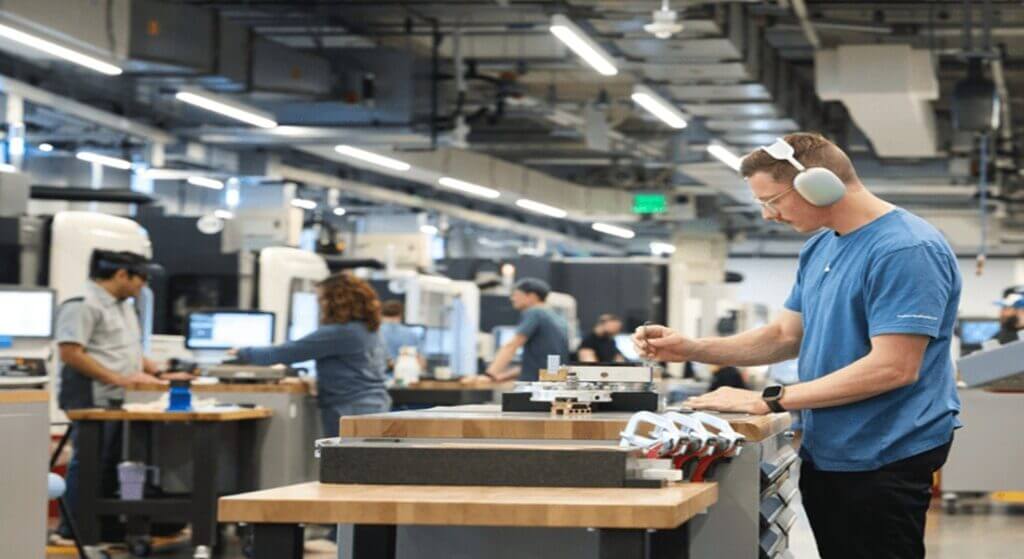
During the forum, discussions focused on how AI is transforming daily manufacturing operations. From predictive maintenance to quality control optimization, the applications of artificial intelligence are expanding rapidly.
See also: Apple is considering Intel and Samsung for chip production
Particular emphasis was placed on the challenges of scaling these solutions. For many SMEs, moving from pilot applications to fully integrated systems remains a complex process, requiring investment, know-how and a change in culture.
Apple is attempting to fill this gap by offering not only initial training, but also long-term technical support. This is an approach that differentiates itself from traditional training programs, as it ensures continuity in the application of new technologies.
Apple Manufacturing Academy: The $600 Billion Strategy
The Apple Manufacturing Academy is part of Apple’s broader $600 billion investment commitment in the United States. The program is provided free of charge to small and medium-sized businesses, strengthening their ability to adopt modern manufacturing techniques.
To date, more than 150 US companies have participated in dozens of in-person training sessions, while the launch of digital courses allows the initiative's footprint to be expanded.
The new virtual sessions include training in predictive maintenance, machine learning for production lines, as well as soft skills like communication, presentation, and project management. Apple seems to recognize that technological transformation requires human skills as well.
Can Apple bring production back to the US?
The initiative also has a clear geopolitical background. Pressure on Apple to boost domestic production remains strong, as the American political leadership seeks to reindustrialize the country.
See also: Apple CarPlay Ultra: Which cars will support it
However, moving the production of devices like the iPhone to the US is still considered extremely difficult. Global supply chains, labor specialization in Asia, and production costs are obstacles that are not easily overcome.
However, Apple is gradually building the conditions for a different production model. Through education, artificial intelligence and automation, it is investing in creating an ecosystem that could make it more realistic to boost American high-tech production in the future. Whether this will lead to iPhone factories on American soil remains an open question, but the first step has already been taken.
