

In an interesting test, Gábor Szárnyas from DuckDB compared the 512GB MacBook Neo with a range of cloud servers to see how Apple's new entry-level laptop performs on heavy database workloads.
See also: A MacBook Neo bought for a student will bring $50k to Apple
In a blog post titled “Big Data on the Cheapest MacBook,” Szárnyas describes how he benchmarked the MacBook Neo using two benchmarks: ClickBench and TPC-DS.
ClickBench includes 43 queries focused on aggregation and filtering operations. The operations are performed on a large table with 100 million rows, which uses approximately 14 GB when in Parquet format and 75 GB when saved in CSV format.
TPC-DS has 24 tables and 99 queries, many of which are more complex and include operations such as window functions. While TPC-H has been extensively optimized, the results of TPC-DS are still valuable.
In all tests, the MacBook Neo was up against two cloud instances. For the ClickBench benchmark, they ran two tests: a “cold” run, which measures performance when the caches are empty, and a “warm” run, which measures performance when the system can take advantage of caching.
See also: Apple released 7 new products today
In the “cold” run, the MacBook Neo significantly beat both cloud instances, completing all queries in less than a minute, up to 2.8 times faster than its competitors. The cloud instances have network-attached disks, and database access to them dominates the overall query execution times. The MacBook Neo has a local NVMe SSD, which, while not top-notch, provides relatively fast first-read access.
In average query execution times, the MacBook Neo can still beat c6a.4xlarge, a medium-sized cloud instance. The laptop's overall execution time is only about 13% slower, despite the cloud box having 10 more CPU threads and 4 times more RAM.
For the TPC-DS benchmark, DuckDB provides fewer comparative details but shows that the MacBook Neo still performs quite well, taking its hardware into account. In the SF100, the laptop passed most queries with an average execution time of 1.63 seconds and a total execution time of 15.5 minutes.
In the SF300, the memory limitation began to become apparent. While the average query execution time was still good at 6.90 seconds, DuckDB occasionally used up to 80 GB of disk space for storage, and it was clear that some queries would take a long time. Notably, query 67 took 51 minutes to complete. However, the hardware and software continued to work together and eventually passed the test, completing all queries in 79 minutes.
See also: The second-generation MacBook Neo will not have a touchscreen
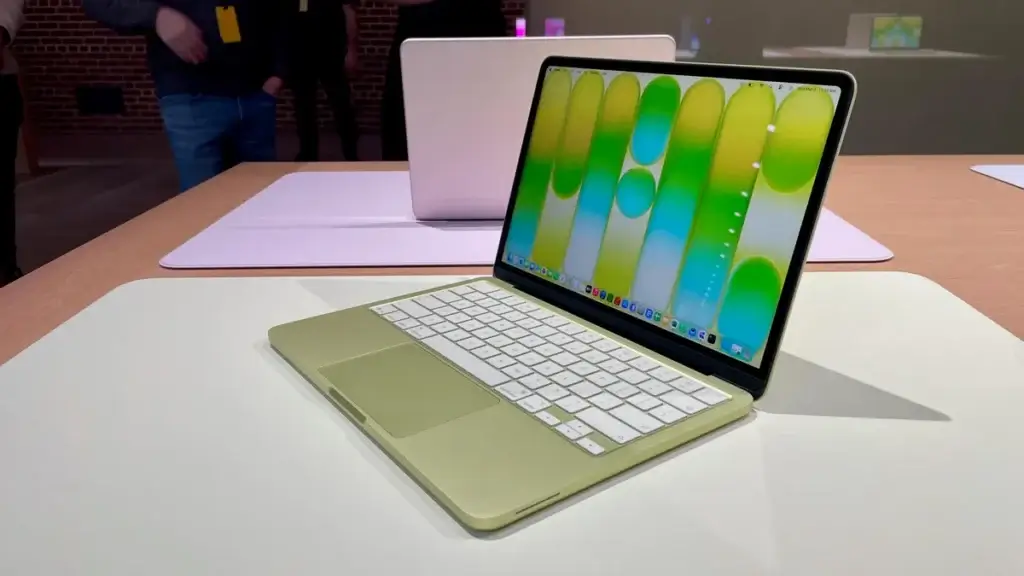
This was not the first time they tested the A19 Pro chip. When the iPhone 16 Pro was released, they ran the TPC-H benchmark with the device inside a bucket of dry ice at -50°C, where it completed the test in 478.2 seconds.
