

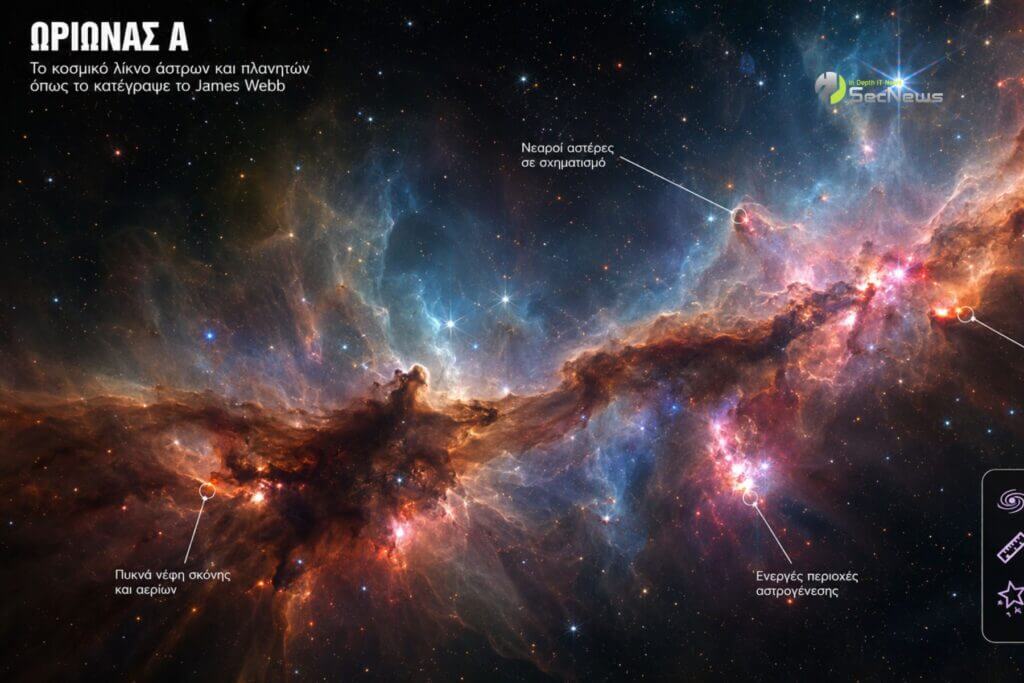
The new “Image of the Month” from the James Webb Space Telescope (JWST) brings the Orion A molecular cloud, one of the most active and spectacular regions galaxy, our. The image, released Monday, June 22, captures the dense concentrations of gas and dust, giving scientists new insights into the processes that lead to the formation of new star systems.
Since its launch in July 2022, the James Webb Space Telescope has fundamentally changed the way we understand the universe. The space observatory, which represents an investment of about $10 billion, has already captured images that reveal aspects of space impossible to observe with previous technologies.
What is the Orion A molecular cloud?
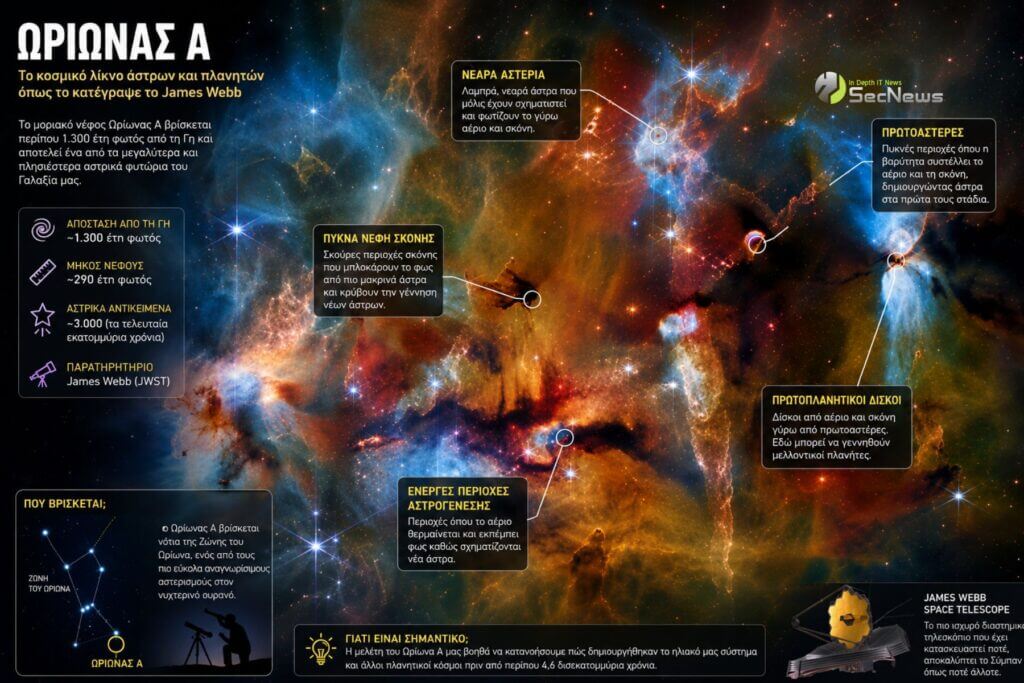
Orion A is located about 1,300 light-years from Earth, south of the well-known Orion Belt. It is one of the largest and closest molecular clouds to our planet, making it an ideal "laboratory" for studying star formation.
This giant structure is composed mainly of gas and interstellar dust, while its characteristic elongated shape extends for a length of about 290 light-years. The density of the materials it contains creates the right conditions for the birth of new stars, transforming the region into one of the most important stellar nurseries in the Milky Way.
A cosmic star-making factory
Astronomers estimate that Orion A has given birth to about 3,000 stellar objects in the last few million years alone. Within the dense regions of the cloud, gravity gradually compresses the gas and dust, creating hot concentrations of matter that evolve into protostars.
The extraordinary sensitivity of James Webb's infrared instruments allows researchers to "penetrate" the dense layers of dust that until now hid much of this process. As a result, scientists can now observe with greater precision the early stages of star formation, gaining valuable information about one of the fundamental mechanisms of the evolution of the universe.
Protoplanetary disks and the birth of new worlds
The molecular cloud also hosts a large number of young protostars surrounded by disks of gas and dust, known as protoplanetary disks. These are cosmic structures from which planets, asteroids , and other celestial bodies gradually emerge.
James Webb 's images offer the ability to study these disks in detail, allowing researchers to examine their chemical composition and evolutionary dynamics. Understanding these mechanisms could lead to important answers about how planetary systems form and how often worlds with conditions similar to those on Earth might form.
Orion A as a "window" into the solar system's past
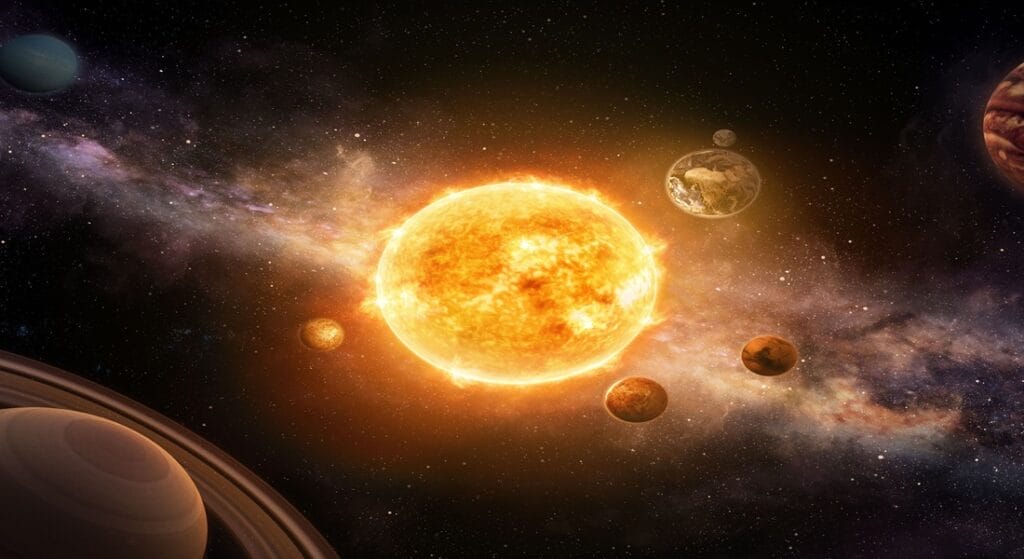
Studying regions like Orion A isn't just about exploring distant cosmic objects. Scientists believe that such stellar nurseries are a kind of time capsule that allows us to reconstruct the conditions under which our own solar system formed about 4.6 billion years ago.
Each new observation from James Webb reveals details that were previously unseen, confirming the telescope's pivotal role in modern astronomy. Orion A is yet another reminder that the universe still holds countless secrets, and that the new generation of space observatories is only just beginning to uncover them.
