


Toyota is once again ranked as the world's worst automaker for climate interference and third worst for plans to produce electric vehicles by 2030, according to InfluenceMap's annual climate interference report.
See also: Extend M4 iPad Pro battery life
Another year, another report showing how bad Toyota is for the environment.
Toyota has consistently been rated at the bottom of InfluenceMap's climate policy rankings, and this year is no exception.
InfluenceMap frequently ranks automakers and auto unions based on how much they interfere to stop climate policy goals. These rankings not only show the automakers’ plans for electric vehicles, but also show how much each automaker is doing to try to stop governments from protecting the population from pollution.

Some of these interference actions come from the automakers themselves, and some come from their participation in professional associations, which aggregate the positions of many companies to increase their influence in interference.
See also: Only 2% purchased Tesla Full Self-Driving after month-long test
InfluenceMap examines the actions of these trade associations around the world and ranks automakers based on how many associations they are members of, how many papers they have submitted for or against various climate policy goals, and what their plans are for the future of their manufacturing.

This is broken down into an “organization score” (how much the organization itself lobbies), “relationship score” (membership in professional organizations and how positive the lobbying efforts are), “involvement intensity” (how actively the company is lobbying), and how much the manufacturer’s electric vehicle plans are.
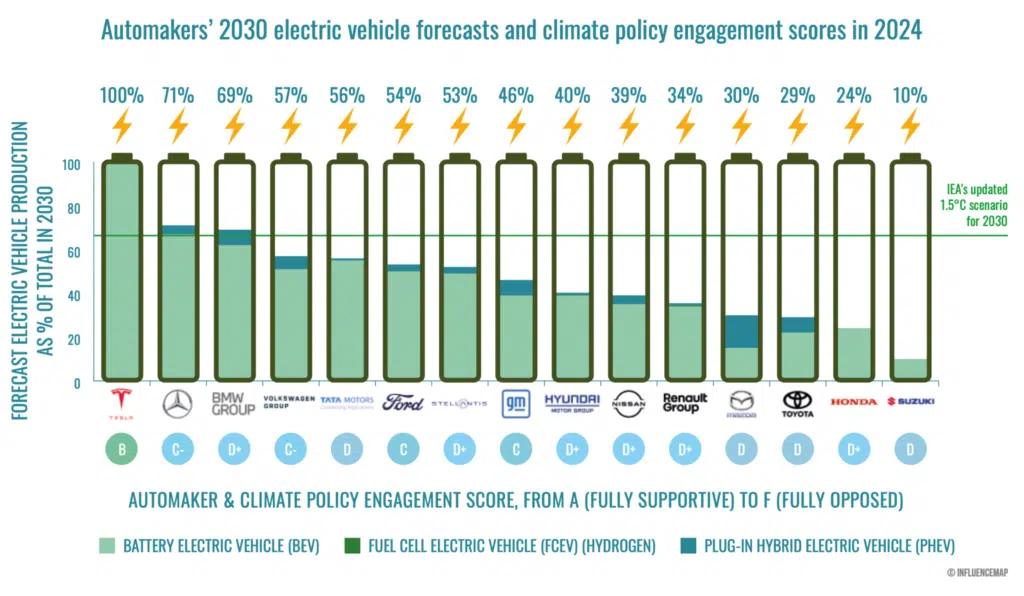
Tesla took first place, but only received a “ B ” rating due to its low intensity of participation. While Tesla supports positive climate policy and is generally a member of groups that push for positive rather than negative climate policy, it does not do as much lobbying as other organizations (which may be exacerbated by the departure of Tesla’s policy chief in April).
See also: Lufthansa: Testing the Meta Quest 3 headset on Business Class passengers
Some other automakers received praise for occasional positive moves, including Ford, GM, VW and Mercedes. But almost none received what could be considered a passing grade — with scores of “C-” or worse for all but three automakers.
And as usual, Japanese automakers rank among the lowest. Japan's electric vehicle industry, Toyota, has been slow to move toward electrification, putting a major national industry at risk. Nissan stands out from the Japanese, but it still didn't get a positive score.
See also: The Xiaomi MIX Flip foldable phone has made its appearance
In terms of production plans, most manufacturers are falling short, with only 3 out of 15 manufacturers analyzed having commitments consistent with the International Energy Agency’s target of 66% electric vehicles by 2030.This number is needed to have any chance of limiting climate change to 1.5ºC. Projections suggest that the industry will only produce 53% electric vehicles by 2030 at its current rate.
Toyota doesn't actually rank last on this measure – Honda and Suzuki are behind it. But given the intensity of Toyota's negative climate lobbying, it takes the crown for worst automaker for the climate once again, continuing its many years of holding it.
Source: electrek
