

MIT scientists have created a detailed simulation of the early universe!
How was the universe created? This is a question that astrophysicists have pondered and explored for many years.
See also: NASA's Hubble: Explores exoplanet where it rains gems
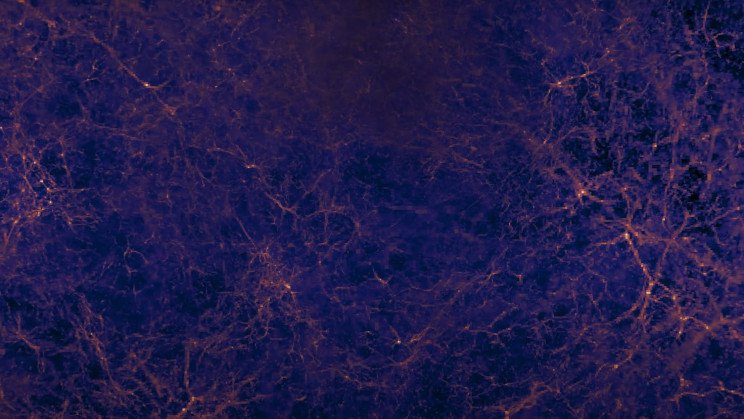
Now, scientists at MIT, Harvard University and the Max Planck Institute for Astrophysics have developed a detailed simulation of the early universe, according to an MIT press release released Thursday.
They named their new simulation Thesan after the Etruscan goddess of dawn, and it is designed to recreate the cosmic period of reionization, a mysterious era that often baffles astrophysicists.
Questions that have concerned us for years
The simulation is used to answer questions such as how far light could travel in the early universe and which galaxies were responsible for reionization.
"Thesan acts as a bridge to the early universe," said Aaron Smith, a NASA Einstein Fellow at MIT's Kavli Institute for Astrophysics and Space Research.
In the early stages of cosmic reionization, the universe was a dark and homogeneous space. For physicists, cosmic evolution during these early "dark ages" is relatively simple to calculate.
To fully simulate cosmic reionization, the team sought to include as many of the major components of the early universe as possible. The work began with a galaxy formation model the researchers had previously built, called Illustris-TNG, which has been shown to accurately simulate the properties and populations of evolving galaxies. The teams then conceived a new code that would depict how light from galaxies and stars interacts with and reionizes the surrounding gas.
See also: NASA: New photo of Jupiter's moons, Io and Europa!
“Thesan is tracking how light from these early galaxies interacted with the gas over the first billion years and transformed the universe from neutral to ionized,” said Rahul Kannan of the Harvard-Smithsonian Center for Astrophysics. “In this way, we are automatically following the reionization process as it unfolds.”.
Finally, the team incorporated a cosmic dust model.
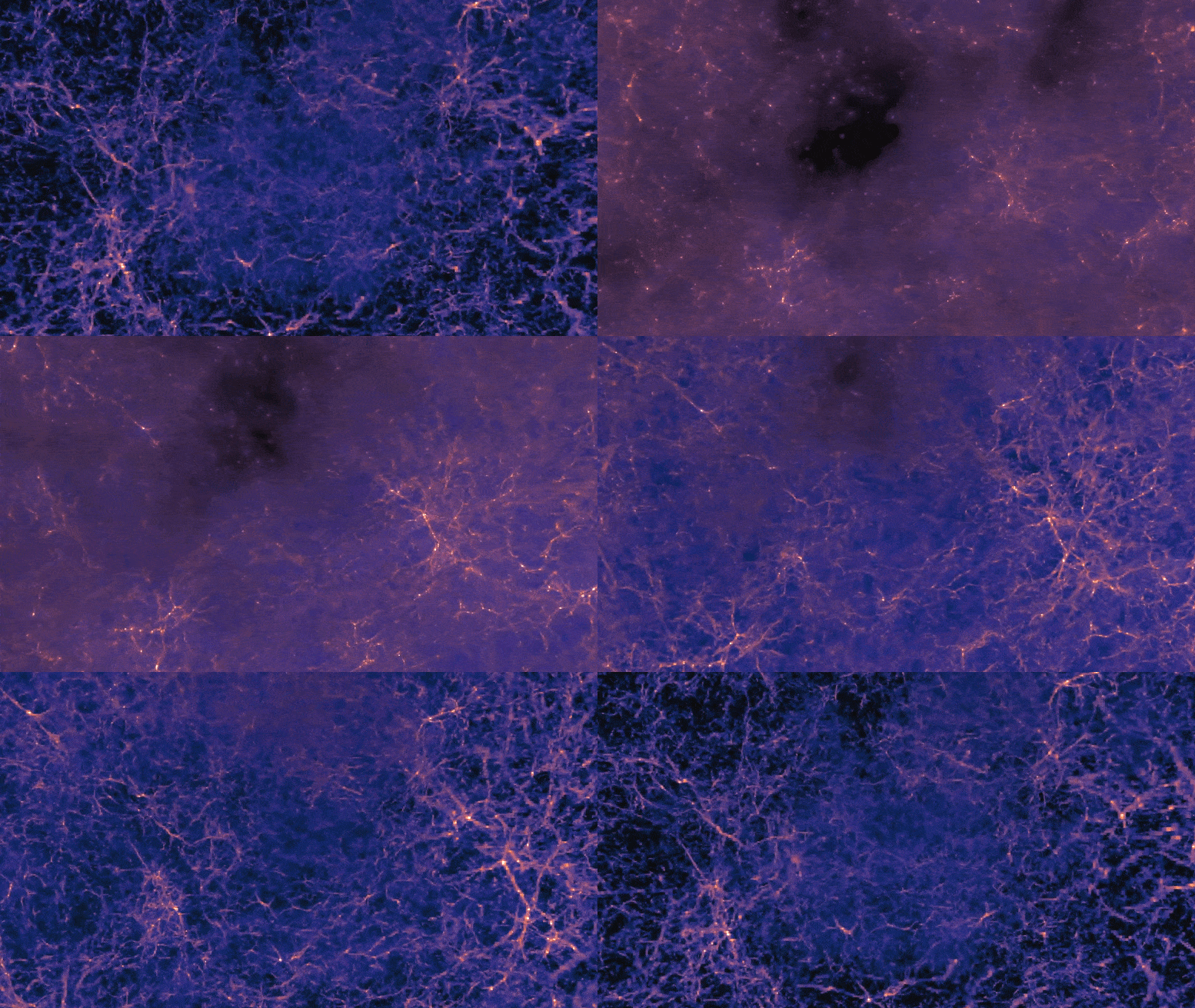
With Thesan, the researchers can simulate a cubic volume of the universe spanning 300 million light-years. They run the simulation forward in time to track the first appearance and evolution of hundreds of thousands of galaxies over this span, starting about 400,000 years after the Big Bang and continuing for the first billions of years.
So far, the simulations align with what few observations astronomers have of the early universe. As more observations of this period are made, for example with the recently launched James Webb Space Telescope, Thesan can help put such observations into cosmic context.
For now, simulations are starting to shed light on certain processes, such as how far light can travel in the early universe and which galaxies were responsible for reionization.
See also: NASA: More than 5,000 exoplanets have been discovered
The end result is a simulation that produces the most detailed view of cosmic reionization, over the largest volume of space, of any existing simulation. There are many simulation models available today, but they either model over large distances at low resolution or offer more detailed simulations that do not extend over large volumes.
The resulting video simulation is a fascinating clip that's fun to watch even if you're not an astrophysicist who can fully understand it. The study is published in the journal Monthly Notices of the Royal Astronomical Society.
Information source: zdnet.com
