

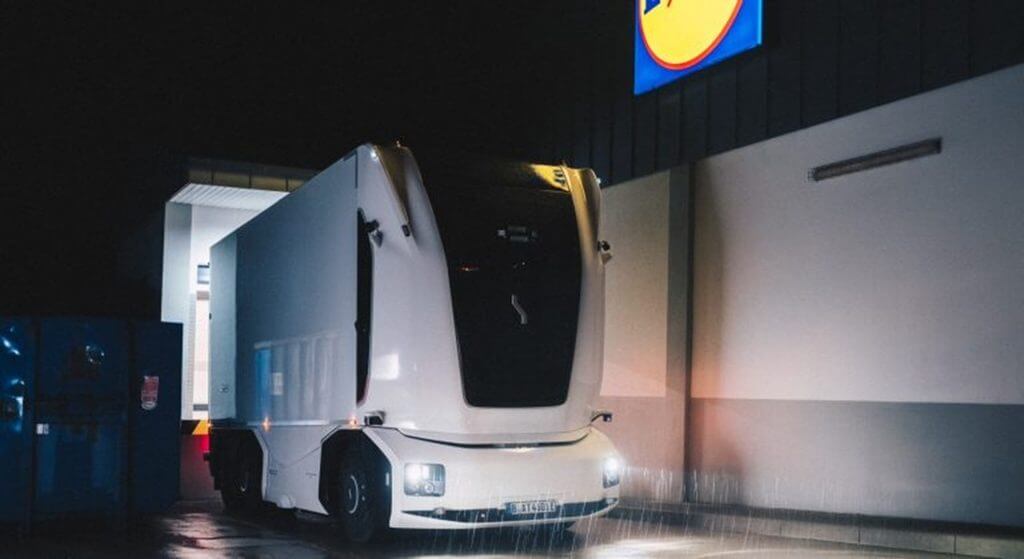
Autonomous driving is moving from theory to everyday operation in Germany, with Lidl putting into commercial use a Level 4 electric truck from Einride, which does not even have a driver's cabin. The vehicle makes daily routes on public roads, connecting a logistics center with the chain's store in Edermünde, Hesse.
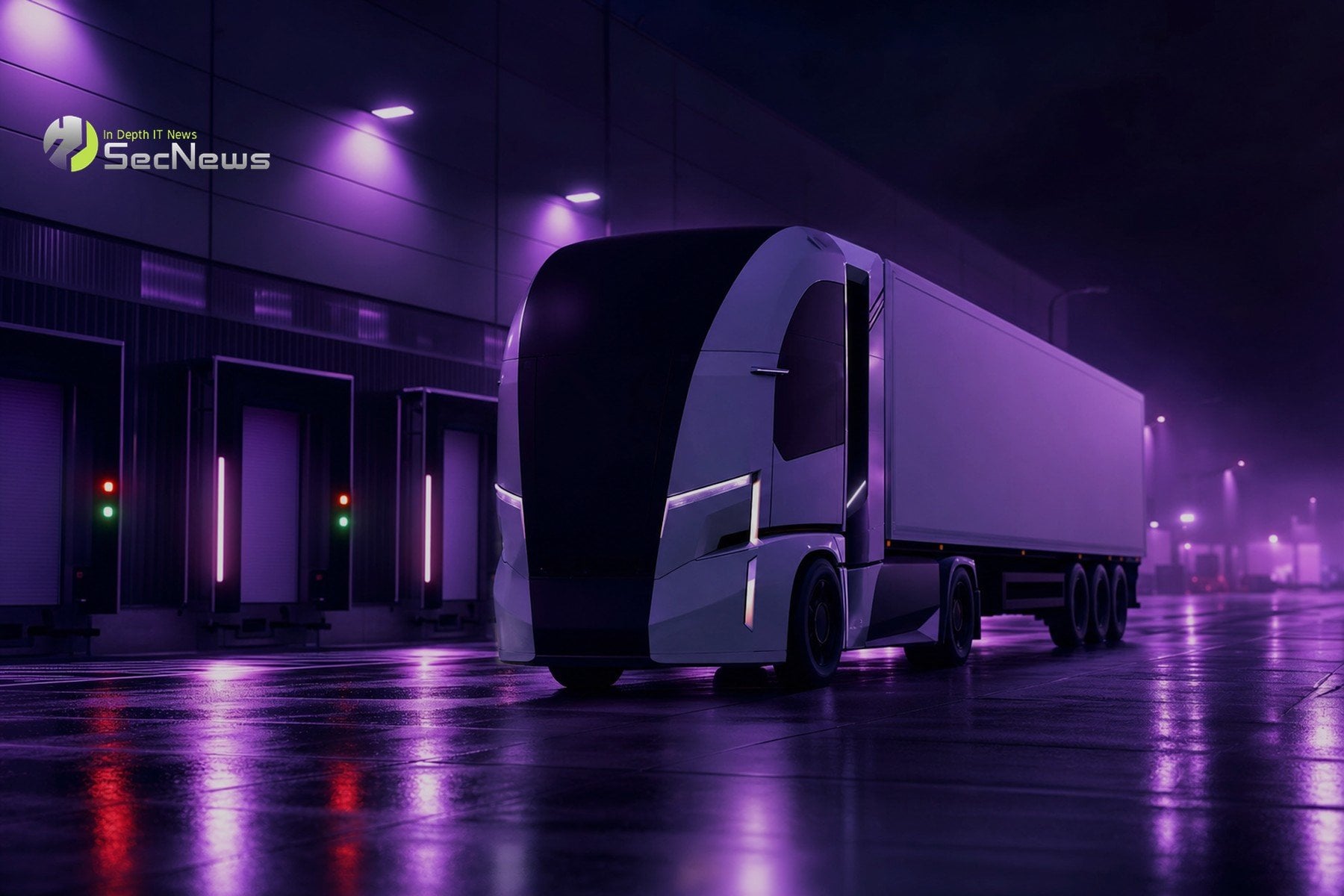
The project stands out not so much for the distance covered by the truck, but for the fact that it is one of the most advanced autonomous freight transport to have received official approval in the country. Its operation was made possible thanks to a special permit granted by the German Federal Transport Authority.
A truck without a cab and without a driver
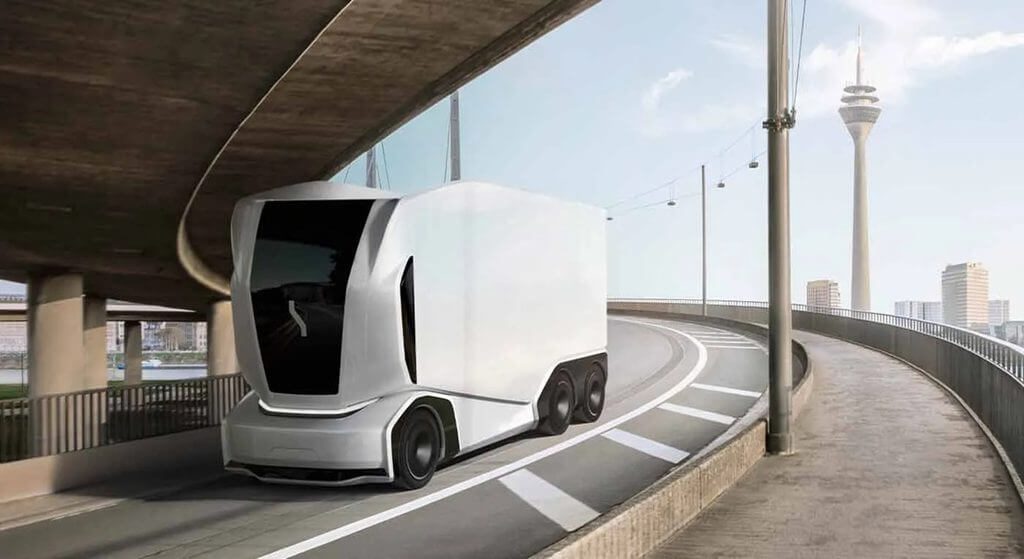
Einride 's vehicle has been designed from the ground up with a different philosophy than a conventional truck. There is no driver's seat or a seat for a safety officer inside the vehicle . The absence of a cabin allows the company to focus exclusively on the cargo space, while also being a prime example of how autonomy can change the design of commercial vehicles.
See also: Tesla confirms Semi electric truck is coming to Europe
This particular case concerns Level 4 autonomy, i.e. a system that can take over driving without human intervention within a predefined area and under specific operating conditions. This does not mean that the vehicle can drive uncontrollably on any road, but that it can perform specific missions autonomously within the approved scope.
The man remains in the "background"
Although there is no driver in the truck, its operation is not left without human supervision. A remote operator monitors the vehicle's status and can intervene in special cases.
This capability includes, among other things, docking procedures at the loading dock. The operator can move the truck at speeds of up to 6 km/h, but this is not equivalent to traditional driving. The basic movement along the approved route is carried out by the autonomous system.
This distinction is important, as it shows that autonomy in transportation does not necessarily mean the complete disappearance of the human factor. On the contrary, its role is transferred from the steering wheel to a remote monitoring center.
An "eye" with cameras, radar and lidar
To perceive its environment, the truck has an extensive set of sensors. Specifically, it uses nine cameras, six radar systems and four lidar sensors.
The combination of different technologies allows the vehicle to collect information from multiple sources. Cameras provide visual data, radar helps detect objects and distances, while lidar creates a more detailed picture of the environment.
The truck is assembled in the Netherlands by an external partner-manufacturer, while Einride has already developed significant commercial activity in the field of electric transport , having leased approximately 200 electric trucks to customers such as Heineken and PepsiCo .
Short journey, big technological step
The truck operates one shift per day, five days a week, transporting approximately 45 pallets between the distribution center and the Lidl store.
The route is particularly short. According to InsideEVs' estimate, based on visual material and Street View data, the distance is less than a mile, as the facilities are located very close to each other.
See also: Meteorite punched a hole in the roof of a house in Germany
This obviously limits the scope of the current application. At the same time, however, it offers a controlled environment in which autonomous driving technologies before being expanded to more complex routes.
Einride has already set a next goal of a multi-stop “milk run” route, where an autonomous truck would serve multiple points in succession.
Permission matters more than a mile
The most important element of the project is not the distance, but the regulatory precedent it creates. German law was amended in 2021, followed by a regulatory framework that allows the operation of Level 4 driverless vehicles in specific areas, after approval of each individual case.
Einride describes the licensing process in Germany as particularly stringent. If the company manages to expand the model to larger and more complex routes, this approval could set an important operational precedent.
Lidl is also gradually examining the application of the technology in real-world conditions. According to Lidl's head of operational logistics in Germany, Thomas Dangelmayer, the program is a milestone that is evaluated through daily operations.
Europe remains fragmented
Despite the existence of European rules for automated driving systems, practical licensing remains largely the responsibility of member states. This creates a significant obstacle for companies wanting to deploy autonomous trucks across the European market.
In other words, a company may have the technology and the necessary European compliance, but need a separate process to operate in a different country.
For Einride, this means that success in Germany does not automatically translate into freedom of movement in the rest of Europe. Each new market may require different approvals, tests and procedures.
See also: Germany: Law to protect security researchers who find flaws
The next step for Lidl and Einride
Einride is already in talks with Lidl's parent company to develop more autonomous trucks, and this development will show whether the project can move from a controlled pilot program to a wider commercial application.
Lidl's autonomous truck can currently travel less than a mile. But the real challenge lies elsewhere: proving that a driverless, cabless vehicle can safely integrate into everyday supply chains. If the model proves to be functional and scalable, Germany's short run could be the starting point for much larger changes in freight transport.
