

An asteroid, or icy object, collided with the giant planet Jupiter on September 13 and exploded into the dense clouds. A Brazilian space photographer, José Luis Pereira, captured the rare solar system event.
SpaceX has started sending citizens into space!
The object was tens of meters wide (probably 36 to 48). Traveling at high speed, it traveled deeper and deeper into Jupiter's thick atmosphere, where due to intense friction and overheating it exploded.
The one- or two-second flash resulting from such an explosion is similar to the bright flash sometimes seen on Earth when a large enough asteroid explodes in the atmosphere, a phenomenon known as an "airburst."
Now, days after the event, astronomers do not believe the object could have been very large, as the explosion would have left large holes in Jupiter's clouds.
However, the impact and the resulting explosion certainly produced a bright light. Astronomers and other researchers use this brightness to measure the size of an impacting object, explained Cathy Plesko, a scientist at Los Alamos National Laboratory who studies asteroid and comet impacts. A larger object creates a more energetic explosion and glow.
Space tourism: It won't become accessible to the general public anytime soon
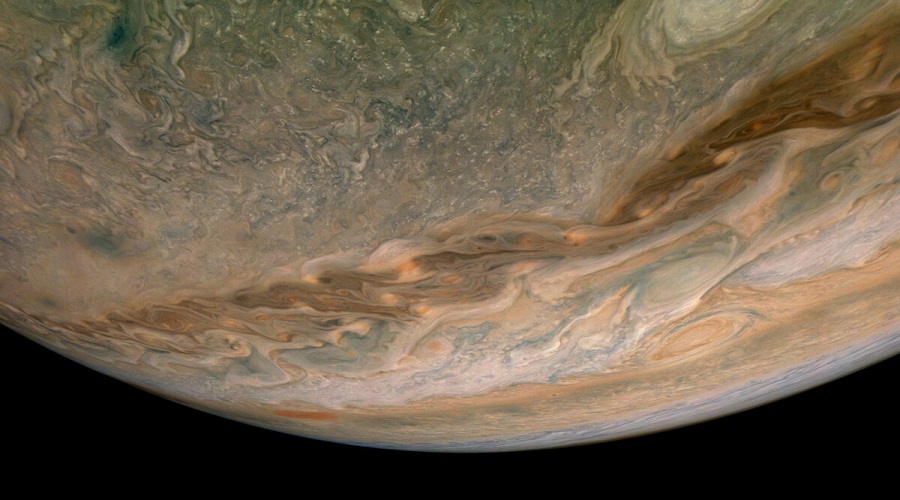
Objects hit Jupiter frequently. It's a large target with a strong gravitational pull. But it's less common for someone like photographer Pereira to capture them. What's more, Pereira did it with an amateur telescope, not a powerful space observatory.
The footage shows that our solar system, now about 4.5 billion years old, is still a bustling, energetic place.
This reality is a stark reminder that threats to Earth, particularly from asteroids, are occurring in the solar system. This is cause for concern. NASA, federal agencies, and global organizations are currently scanning the solar system for potentially threatening objects.
NASA: 'Volcanic eruptions' on Mars could obscure the Sun
Scientists estimate that no objects larger than 140 meters have yet been found near Earth. These meteorites could destroy urban areas. An asteroid believed to have been about 30 to 51 meters across left a 182-meter-deep crater in Arizona 50,000 years ago. “A similar-sized impact today could destroy a city the size of Kansas City,” David Kring, an impact specialist at the Lunar and Planetary Institute, told NASA this year.
