

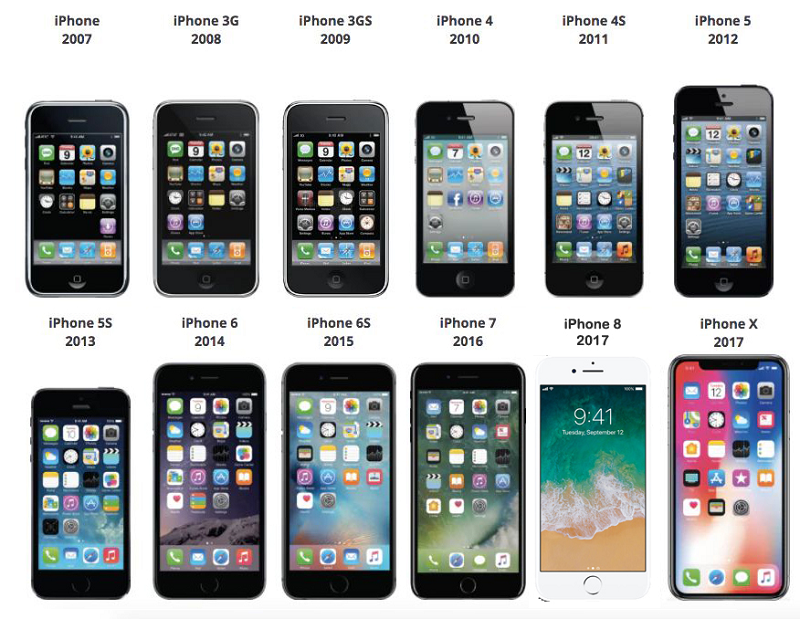
 Mass technological innovations cause people to have “false” and “virtual” needs, resulting in them investing more and more in technological gadgets, without taking into account that they have a limited lifespan and do not last forever. Specifically, when it comes to iPhones, the dominant question concerns their duration. In other words, everyone wonders every time how long an iPhone is expected to last, as this element shows on the one hand whether a good investment has been made in the device from an economic point of view and on the other hand whether one can count on the device for the future. However, like all technological gadgets, iPhones also have a specific lifespan. An iPhone can, in addition to being lost, either break or have a problem with its battery, which indicates the poor quality of the battery. When the battery will fail depends on both the iPhone model and the frequency of use. However, the fact that batteries are consumable and do not last forever should be taken into account.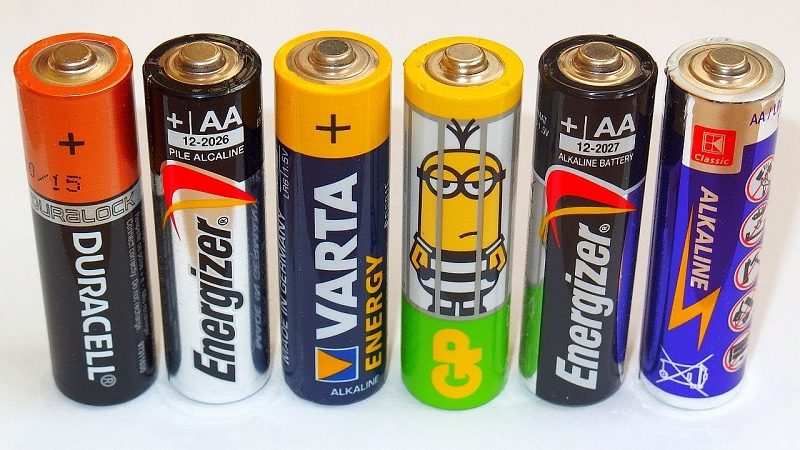
In particular, regular alkaline batteries, such as a Duracell or Energizer battery, have a lifespan of one charge cycle and can only be used once. Rechargeable batteries also have a lifespan. According to Apple, the iPhone battery is designed to retain up to 80 percent of its original capacity after 500 full charge cycles. There is a Mac called CoconutBattery 3 that provides more information about batteries.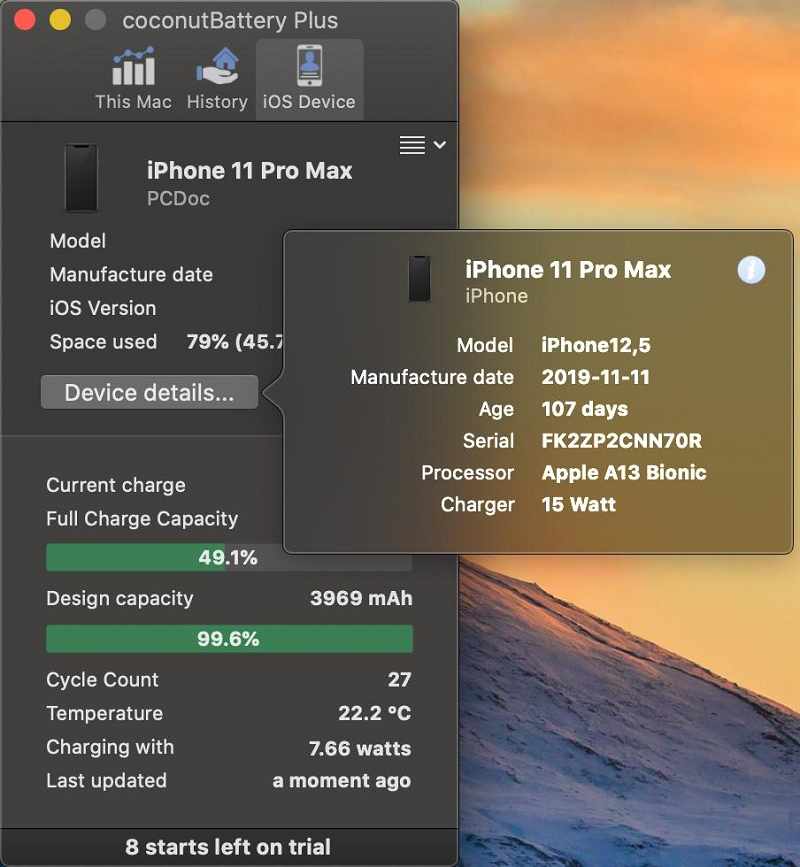
If we assume that the lifespan of a battery is equal to 500 charge cycles, then we can use the number of charge cycles along with the lifespan of the device to calculate how long it will last. It is worth noting that there is no further information about age from CoconutBattery, as this only reports the date of manufacture of the device and not how long the device has been used.
According to an iPhone enthusiast who has measured how long it takes to charge the iPhone 11 and iPhone 11 Pro Max, the following applies:
iPhone 11: 1.6 days
iPhone 11 Pro Max: 2.6 days
If we assume that the battery wear is 20% over 500 charge cycles, we reduce the charge cycle by 10% to reach an average of 500 cycles.
iPhone 11: 1.4 days
iPhone 11 Pro Max: 2.4 days
This means that the time to reach 500 charge cycles, if someone uses it continuously, is as follows:
iPhone 11: 720 days (or 2 years)
iPhone 11 Pro Max: 1,200 days (or 3.3 years)
So, the more money someone spends on an iPhone, the longer the battery life. This is because the battery capacity is larger, so each charge cycle is longer.
Another issue that arises is capacity. Therefore, a user should calculate how much storage space they will need, because this is another common reason why people are not satisfied with their iPhones. This is more difficult to plan for and depends on the amount of data a person wants to transfer to the cloud and how much money they are willing to pay for cloud storage.
In summary, an iPhone 11 is likely to last a few years before the battery starts to fail, while the iPhone 11 Pro Max is expected to offer users a satisfactory three-year experience.
