

Google has started rolling out Android 17 , bringing a number of new features focused on productivity, security , and deeper use of artificial intelligence . The new version of the operating system is already available for Pixel devices , and in the coming months it is expected to reach smartphones from leading manufacturers such as Samsung , OnePlus , and other partners in the Android ecosystem.
While Android 17 doesn't come with a radical redesign of the user interface, it does introduce significant improvements that directly affect the daily user experience. From advanced multitasking to new privacy controls, Google is attempting to create an operating system that is more flexible, secure, and ready for the age of artificial intelligence.
See also: Google's Gemini 3.5 Flash ranks in Android coding lists
Bubbles: A new era in multitasking on Android devices
One of the biggest additions to Android 17 is the Bubbles, which essentially turns any app into a floating task window. Until now, similar features were mostly limited to messaging apps. Now, users can open apps in resizable windows that stay on top of the rest of the screen content.
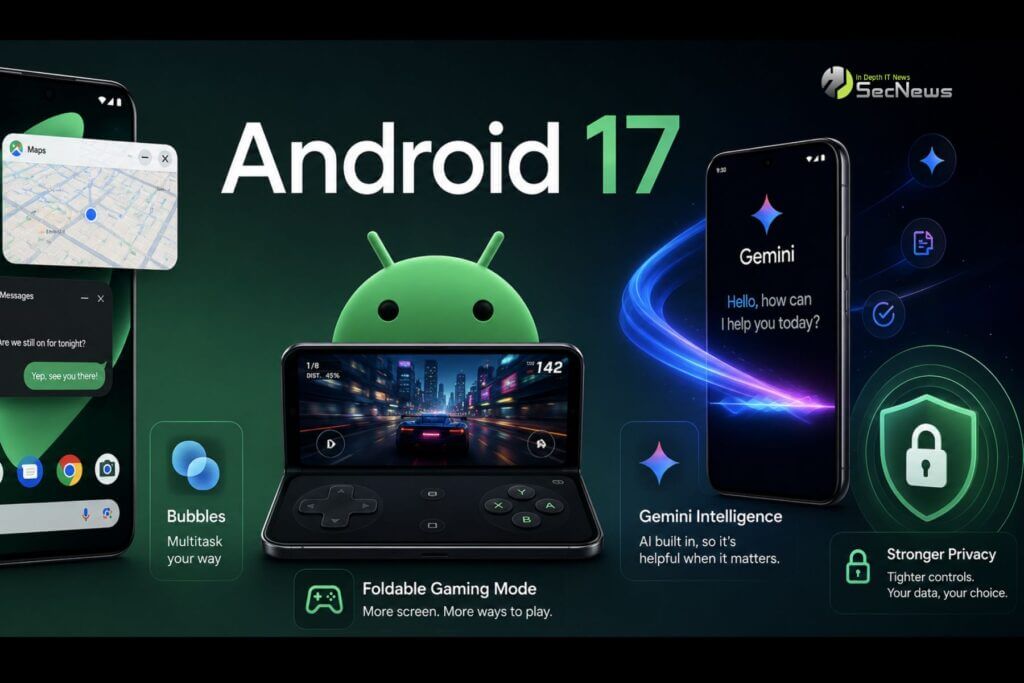
This approach is expected to significantly improve productivity, allowing the simultaneous use of multiple applications without constant switching. Particularly on foldable smartphones, Google has designed a permanent access bar that facilitates quick switching between active windows.
Screen Reactions: Built-in tool for creators
Content creation now has native support within the operating system. The new Screen Reactions leverages the front camera during screen recording, simultaneously capturing the user's reactions and comments.
The end result is a single video that combines the content on the screen with the creator's image. This feature is aimed at streamers, trainers, app reviewers and user guide creators, reducing the need to install specialized third-party applications.
Foldable Gaming Mode: Foldable smartphones in the spotlight
Google is clearly showing that it sees foldable smartphones as a key part of the future of Android. The new Foldable Gaming Mode takes advantage of the large internal screen of foldable devicesby dividing the available space into two independent zones.
The top section displays the game, while the bottom section displays a fully customizable virtual controller. The ability to remap buttons at the operating system level gives players greater freedom, regardless of the options offered by each developer.
See also: Apple Intelligence: It may offer a better Gemini experience than Google

At the same time, Google reports improvements in memory management, aimed at smoother execution of demanding titles and reducing lag during gaming.
Greater control over personal data
Privacy protection is another key focus of Android 17. Users now have the ability to grant temporary access to their location , which automatically expires after the end of a usage session.
Accordingly, apps can only access selected contacts and not necessarily the entire address book. This is an approach that significantly limits data collection and brings Android closer to the strict privacy standards that have been established in the smartphone market in recent years.
In addition, the new “ Mark as Lost ” feature enhances protection in cases of theft or loss of a device, while threat detection systems now operate continuously in the background, identifying suspicious application behaviors in real time.
Gemini Intelligence: Google's big bet
While Android 17 is a significant upgrade in itself, the real focus is on Gemini Intelligence. The new AI platform will be available separately on select premium devices and promises deeper integration of Gemini into the core functionality of the operating system.
This strategy demonstrates Google's intention to transform AI from a simple assistance tool to an integral part of the user experience. However, several details remain unknown, which raises questions about the scope of capabilities that will be available at launch.
See also: WhatsApp and Slack notifications can hack Google Gemini on Android

The European obstacle and the future of Android
The launch of Android 17 comes at a critical time for Google in Europe, as regulators look at ways to ensure Android allows equal access to competing AI assistants, limiting potential exclusionary practices.
The outcome of this process may have a significant impact on the company's strategy, especially as Google seeks to integrate Gemini not only into smartphones but also into future Android-based computing devices.
Overall, Android 17 is not a design revolution, but a targeted upgrade that significantly improves multitasking, security, and AI capabilities. Whether it can fundamentally change the user experience will depend largely on the success of Gemini Intelligence in the coming months.
