

Few features have promised to revolutionize the way we interact with devices as much as Siri, the company’s ubiquitous digital assistant. Launched in 2011, Siri was introduced as a harbinger of a new era in human-computer interaction, offering an intuitive voice-controlled interface for accessing information, scheduling appointments, sending messages, and more. The vision was grand: A personal assistant in your pocket, capable of understanding and acting on a wide range of voice commands with ease and accuracy.
See also: iOS 18: Will Siri get significant improvements?
However, enthusiasm for Siri has undeniably waned in the intervening years. Despite regular updates and improvements from Apple, Siri has struggled to keep up with its advanced rivals, and in the age of AI chatbots and large language models, Siri’s failings have been magnified. Issues ranging from misinterpreted commands to limited contextual understanding have not only hampered Siri’s usability, but have also led to a near-universal perception of the virtual assistant as a source of frustration rather than help. This declining performance begs the question: Is it time for Apple to replace Siri with something more sophisticated?

Apple launched Siri as more than just a tool — it was your intelligent assistant ready to help you with a variety of tasks. Whether it was setting reminders, sending messages, making phone calls, or finding information online ,Siri aimed to streamline it all with a simple voice command. There was nothing like it at the time, and the initial results were impressive, but the key promise was that Siri would not only understand you but also learn from you, becoming more efficient and personalized over time.
See also: Siri: New Health Features on Apple Watch
But even now, the assistant that was supposed to understand and grow with the user still faces significant challenges in terms of context, comprehension, and integration, whether it’s pinging Apple’s servers or processing requests locally. Many Apple device owners often say that it struggles with even basic commands. Indeed, many users believe that, at least in some areas, Siri’s abilities have gotten worse over time, especially since the release of iOS 17.Many users agree that very little has changed in the past eight years.
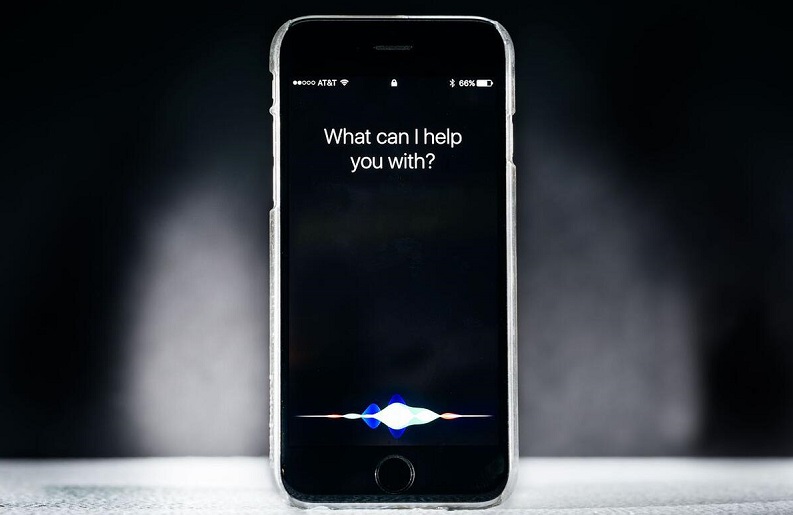
Lately, it's been rumored that Apple is planning to use large-scale language models to completely revamp Siri and turn it into the "ultimate virtual assistant." However, more recent reports have claimed that Apple has no plans to debut its own chatbot . Apple has reportedly been in talks with companies like Google, OpenAI, and Baidu about potential productive AI partnerships, but Apple's first set of new AI features in iOS 18 won't rely on cloud servers at all.
See also: iPhone 16: Improved Microphones and Improved Siri with AI
The idea of rebranding Siri to something entirely new has been floated by some tech watchers. Many believe that Apple should get rid of Siri, as it would be difficult for users to change their minds about it. Introducing an LLM-powered assistant with a new name could be a fresh start to overcome the negative associations that currently plague Siri.
Source: macrumors
