

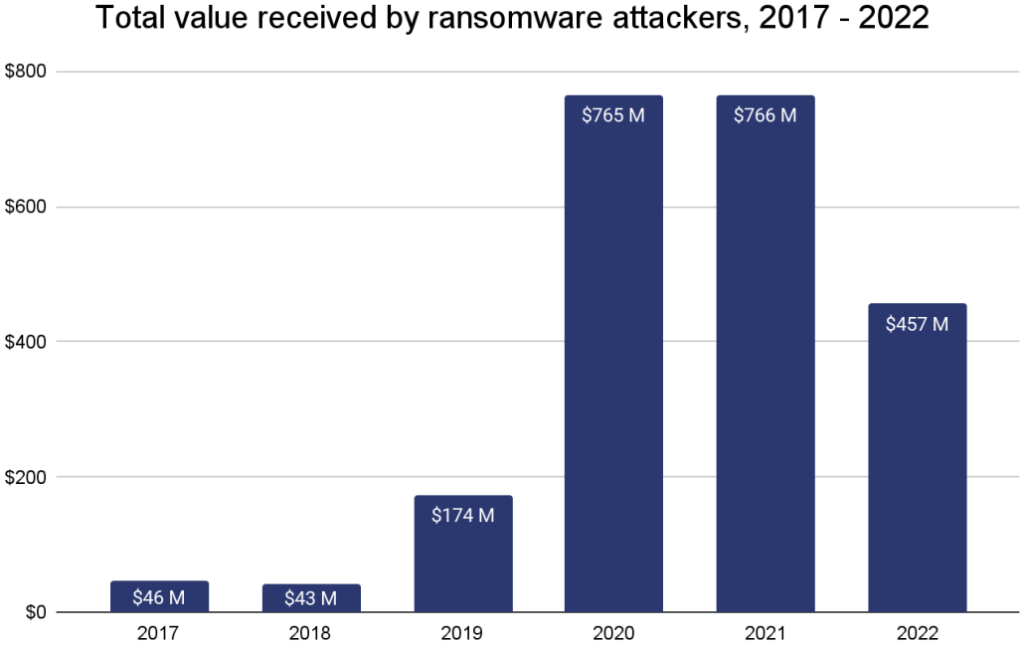
Ransomware gangs extorted an estimated $456.8 million from victims in 2022, a drop of about 40% from the record $765 million recorded in the previous two years.
See also: MailChimp: New security breach of its employees

Chainalysis, a blockchain analytics firm, reports that ransomware profits have declined significantly in recent years. The decline is not due to fewer malicious attempts, but rather to victims refusing to pay the hackers.
In 2022, ransomware activity saw a huge increase with an unprecedented number of malware strains encrypting files and attacking small and large companies.
See also: Ukraine: Russian hackers Sandworm attacked Ukrinform
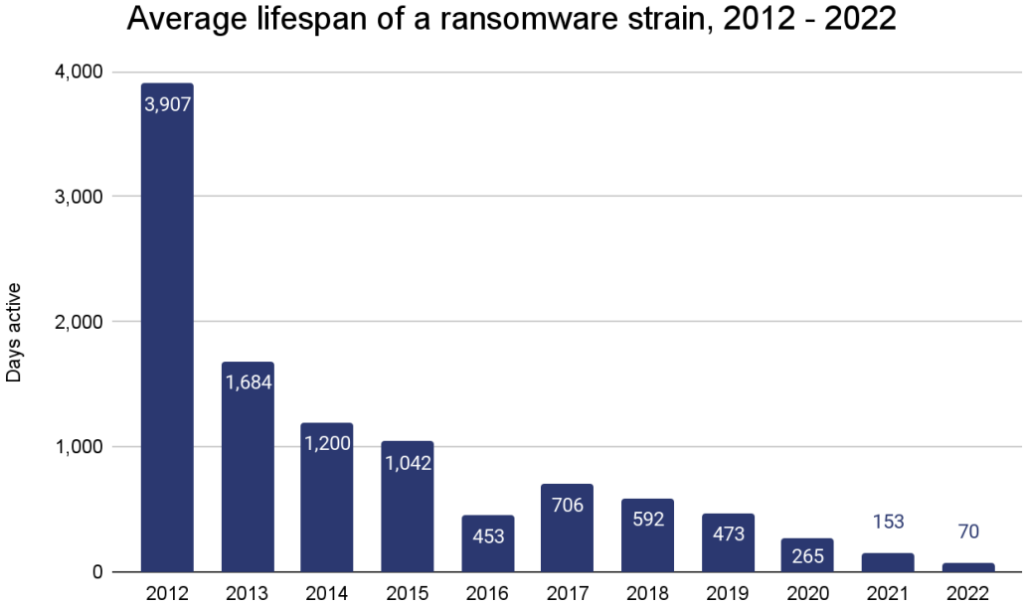
However, likely as a result of reduced profits and other factors, the average ransomware lifespan decreased from 153 days in 2021 to just 70 days in 2022.
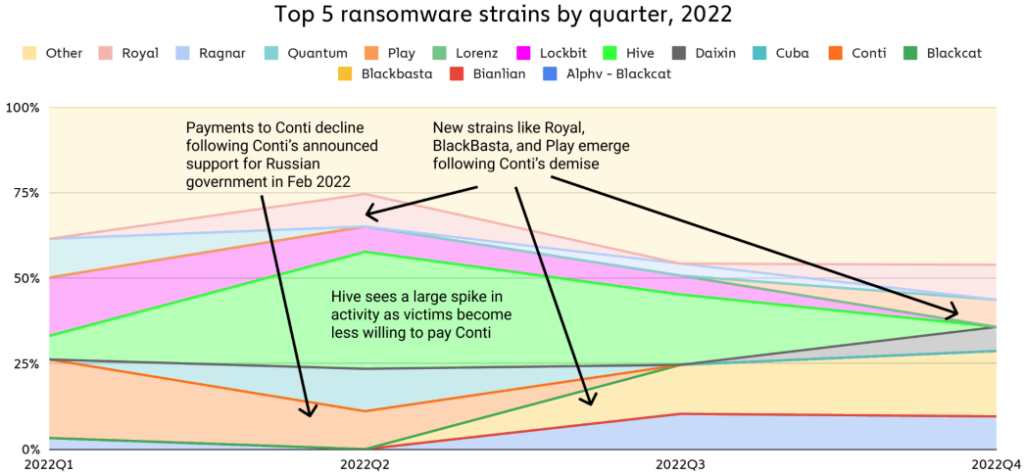
2022 was marked by the completion of Conti's operations, as well as the launch of new ransomware-as-a-services by Royal, Play , and BlackBasta. Meanwhile, operators of LockBit, Hive, Cuba, BlackCat, and Ragnar ransomware maintained a relatively steady flow of victims throughout 2022.
As cybercriminals use increasingly threatening, sophisticated tactics – such as file encryption, DDoS attacks, threats to leak stolen data or even alerting data protection authorities to a breach – more and more victims are refusing to give in to the attackers’ demands.
Coveware, a cyber intelligence company, has noticed an observable trend in its data since 2019, which reveals that victim payment rates are continuously decreasing.
In 2019, the majority of ransomware victims decided to pay – an impressive 76%. However, by 2022, this percentage had dropped significantly as more people chose not to give in to cybercriminals’ demands – only 59% chose to pay.
See also: Kraken rival hacks illegal darknet marketplace Solaris
Last year, we witnessed a significant shift in attitudes towards ransomware attacks – more victims chose not to pay the ransom than ever before. This suggests a significant transformation in how attackers and defenders perceive cybersecurity threats. 2022 was a pivotal moment for both parties, as perceptions around these attacks began to transform.

This change can be attributed mainly to three things:
- As victims come to terms with situation , they soon understand that paying the ransom does not guarantee the recovery of their files and that the hackers may well delete them.
- In recent years, public understanding of ransomware attacks has improved, reducing the extent of damage to a company's reputation in the aftermath of data breaches.
- To ensure that their IT infrastructure is restored in the event of a ransomware attack, organizations are seeking and employing sophisticated backup that are required by insurance providers.
Although victims have taken a different approach to ransomware attacks than they did two years ago, it is still difficult to completely deter hackers.
As long as cybercriminals are able to successfully extort money from victims – whether through smaller-scale, widespread attacks or larger, high-value targets – ransomware will remain a looming threat.
Information source: bleepingcomputer.com
