

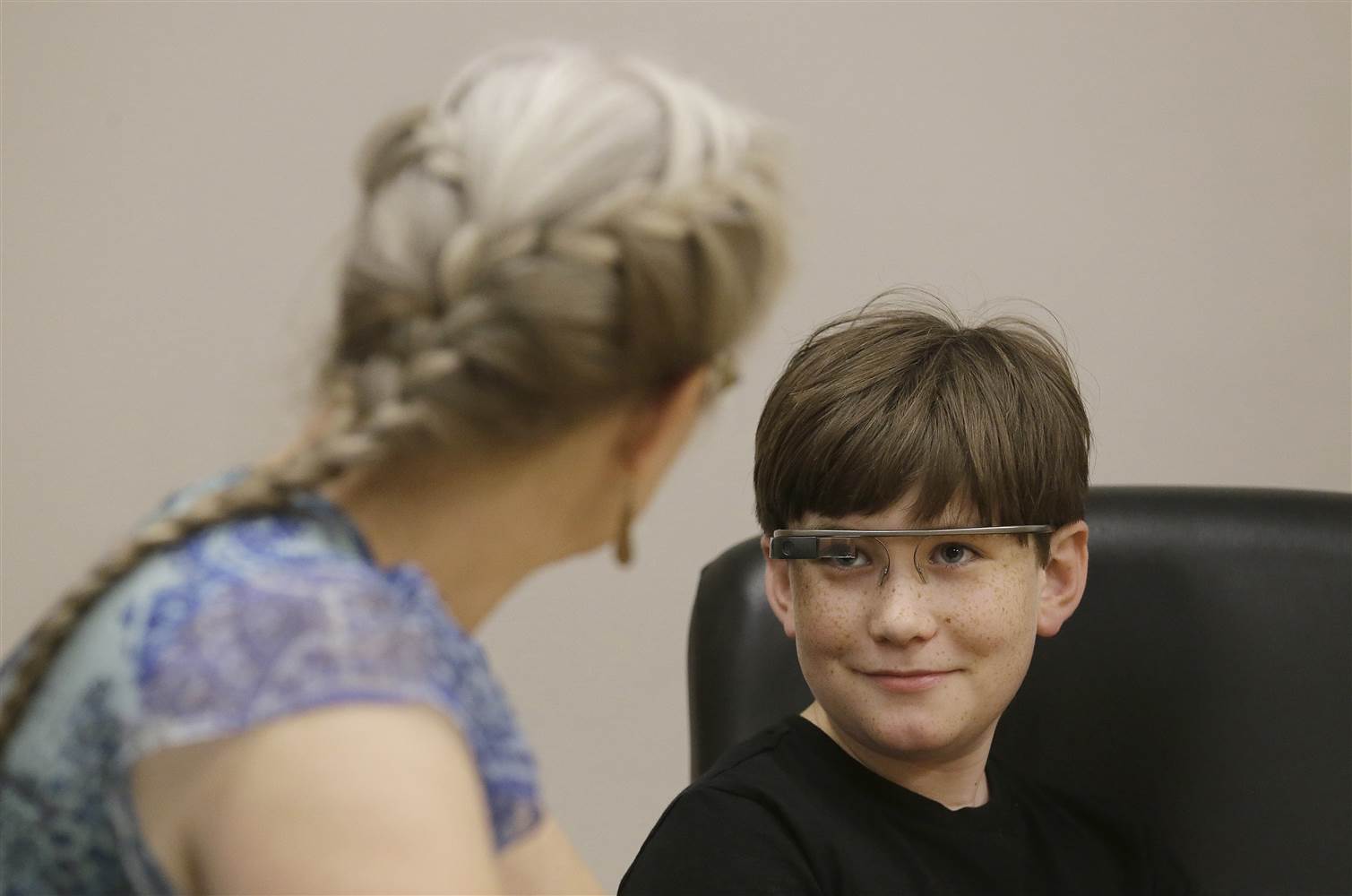
Many autistic children have difficulty reading emotions on people's faces, which is one of the biggest challenges for people with the neurological disorder. However, the “Autism Glass”, an experimental device that records and analyzes faces in real time can help.
The facial recognition software was developed at Stanford University and runs on Google Glass, a computerized eyewear with a camera on the front and a small display right above the right eye.
“There is no machine that can read our minds, but it helps with recognizing emotions as they are reflected on our faces.” When the device’s camera detects an emotion, such as happiness or sadness, the user sees the word “happy” or “sad” – or a corresponding “Emoji” – on the glass screen. The device also tests its ability to read facial expressions.
«The program aims to teach children with autism how to understand a face. And we believe that, when this happens, they will become more social» said Dennis Wall, who heads Stanford's Medical Laboratory, which is conducting the study. Stanford student Catalin Voss and researcher Nick Haber developed the face-tracking and emotion-detection technology for a wide range of people.».
Google provided about 35 Google Glass devices to Stanford, but otherwise has not been involved in the project. The Silicon Valley tech giant stopped producing the headset last year after failing to generate interest.
Autism advocates are excited that researchers are developing technologies to help individuals who are on the autism spectrum.
Currently, many autistic children learn to read facial expressions by working with therapists using flashcards. The Stanford team hopes that “Autism Glass” could provide a convenient, affordable therapy that families can do at home. “Children with autism are not getting the care they need for as long as they should, and that needs to be fixed,” Wall said. If the study shows positive results, the technology could be commercially available within two years, Wall said.
“Anything that can help this population is very welcome and very important, but even the best technology will never be enough, because we are dealing with a population that often has very, very deep needs,” said Jill Escher, president of the San Francisco Bay Autism Society.
