

Snap has introduced Specs , a pair of augmented reality (AR) glasses , which it describes as a wearable computer embedded in a pair of transparent glasses.
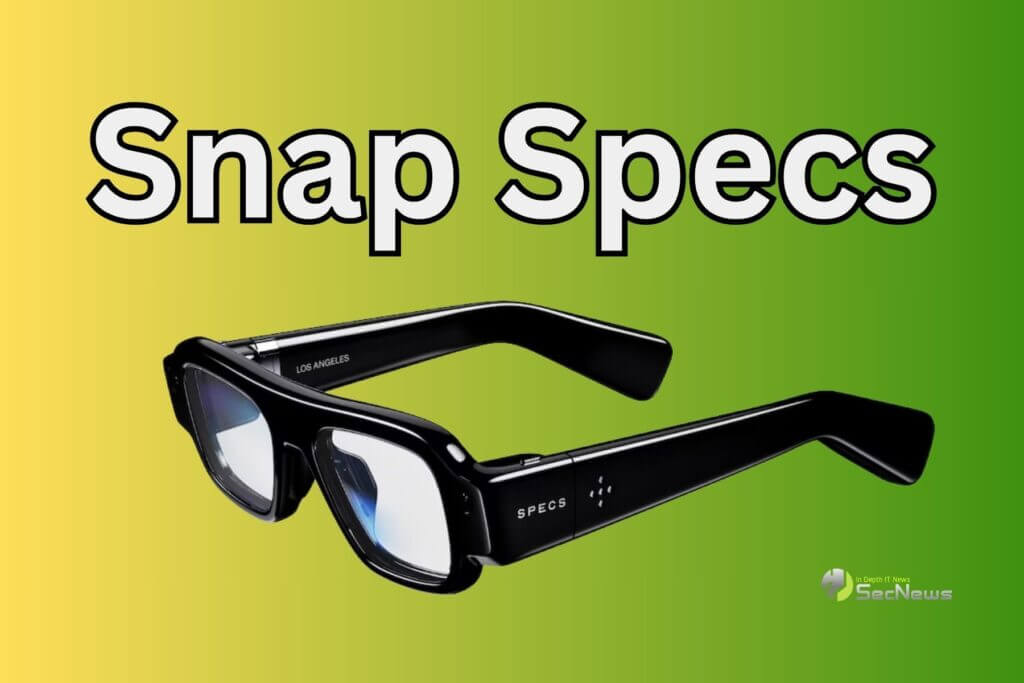
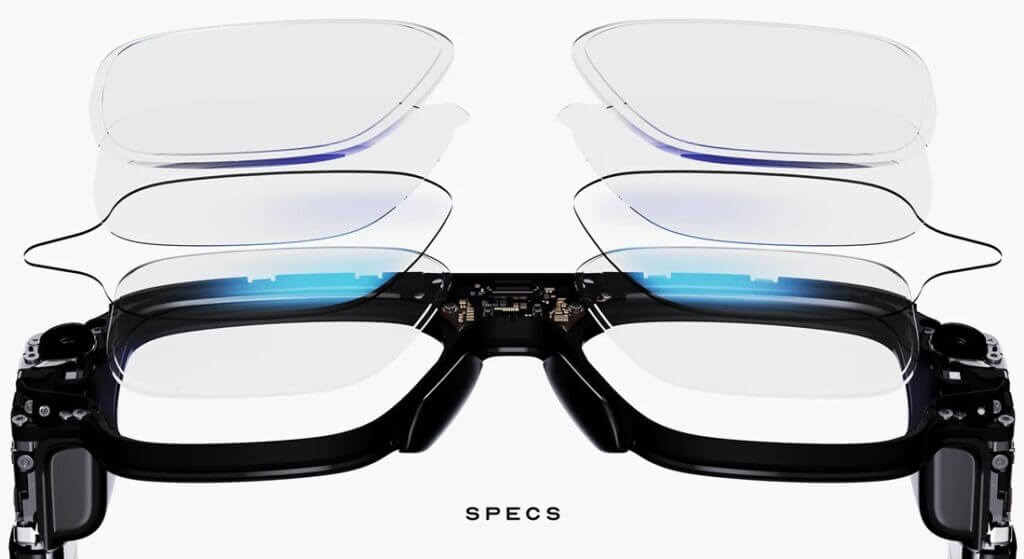
Snap Specs are made from Swiss TR90 polymer, which makes the glasses lightweight and durable. In fact, according to the company, the glasses are light enough to “wear for hours” and come in two sizes. The 47mm frame weighs 132 grams, while the 52mm frame weighs 136 grams. The lenses can be easily installed and replaced so the glasses can be exchanged with friends and family.
See also: Snap lays off 16% of its staff as it invests in AI
Snap Specs: Cameras, sensors, chip, speakers
The AR glasses include cameras and sensors that feed data to an AI system with understanding of the environment. There are two high-resolution full-color cameras, two infrared computer vision cameras, and 6-axis IMUs for inertial sensing.
Inside are two Snapdragon chips, with one processor powering the lenses and the other handling computer vision.
The Specs has a 51-degree field of view and a stereo waveguide display with automatic tinting for different lighting conditions. The device uses liquid crystal on silicon (LCoS) microprojectors to project images onto the screen. Snap compares the field of view to a 115-inch display viewed from 10 feet away.
Stereo speakers for spatial audio are included , and there's a microphone array for audio input. The glasses have hand-sensing capabilities for gesture control, as well as voice recognition and support for natural voice commands.
See also: Fable releases February 23, 2027 after new delay
Autonomy and capabilities
The Specs last up to four hours with mixed use and feature a custom magnetic charging cable that can charge the glasses while they're on. They come with a charging case that supports 20 hours of use. Snap's previous-generation Spectacles, which were limited to developers only, offered 45 minutes of battery life.
Specs can be used to watch content like movies, videos, and TV shows, project on a screen, write on a whiteboard, and use the many existing Snapchat lenses. Specs can also connect to a computer, phone, or gaming system via USB-C to be used as a display.
Snap CEO Evan Spiegelintroduced Specs at AWE USA 2026 and showed off some of the experiences developers have created with Lens Studio . Since Specs can use lenses developed for Snapchat, there are already options for placing virtual objects, mini-games, DIY help, and more.
See also: Snapchat: New protection measures for teenagers against doxxing
Lens Studio gets agentic development for lenses, and there are developer integrations for Claude Code, Codex, and Cursor. Lenses can rely on APIs from OpenAI and Gemini for AI-powered augmented reality experiences.
The Specs cost $2,195and are expected to be released later this fall in the U.S., U.K., and France.

With the new Specs, Snap is taking a major step towards the future of augmented reality, introducing a device that aims to combine everyday use with advanced artificial intelligence capabilities. The improved battery life, powerful AR capabilities, and support for apps that leverage AI models like Gemini and ChatGPT clearly demonstrate the company’s strategy to invest in a new generation of wearable computing devices.
Whether they will succeed in gaining the interest of the wider public remains to be seen, but Snap's new proposal confirms that augmented reality and AI are now at the center of the next technological era.
