

The United States Department of Justice (DOJ) announced the seizure of the domains CFAKE.com and SOCFAKE.com, websites that allegedly hosted and distributed non-consensual nude images and videos of women created using deepfake.
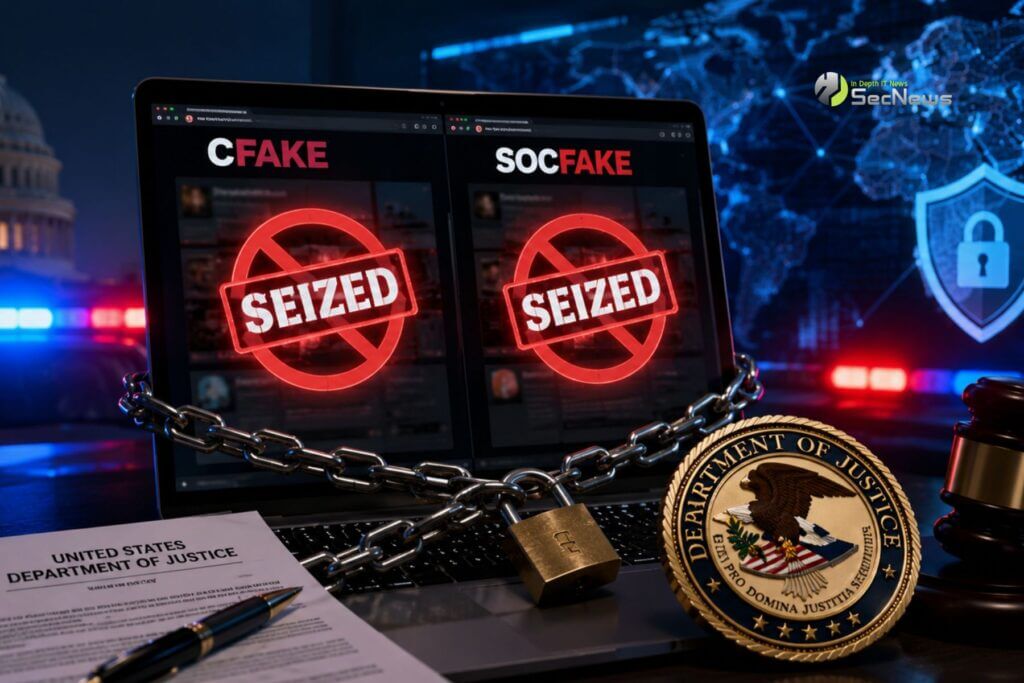
The case is considered a milestone for the implementation of the new US TAKE IT DOWN, as it is the first publicly known seizure of websites carried out under this legal framework. This development signals a more aggressive stance by the authorities against a phenomenon that has taken on alarming proportions in recent years.
What are deepfakes and why are they a cause for concern?
Deepfakes are digital media created or modified through algorithms Artificial Intelligence, resulting in people appearing to say or do things that never happened in reality.
See also: AI Act: Europe moves to ban nude image AI tools
Although the technology has applications in cinema, education and digital content creation, its misuse has become one of the most serious issues of the modern digital age. In particular, the creation of non-consensual pornographic material has become one of the most widespread forms of digital abuse, causing serious psychological, social and professional impacts on victims.
Images and videos can be created from simple photos posted on social networks, making almost any person a potential target.
CFAKE and SOCFAKE: Targeting politicians, celebrities and public figures
According to the Department of Justice, these websites contained sexually explicit photos depicting well-known women from around the world.
The victims reportedly included politicians, first ladies of states, members of royal families, journalists, television presenters, athletes, artists and other high-profile public figures.
The fact that deepfakes creators targeted individuals with a strong public presence highlights the use of technology as a tool for exploitation, defamation, and violation of personal rights.
An international operation involving three countries
The operation that led to the seizure of the websites was not limited to the United States. Instead, it was the result of close cooperation between American, French and Italian authorities.

The investigation began when the Italian Postal and Cybersecurity Police informed US authorities about the operation of the websites. Italian investigators had already received complaints about material generated using artificial intelligence and depicting women from the worlds of politics, sports and entertainment.
As the investigation progressed, the information was shared with French authorities, who conducted a parallel investigation. The cooperation culminated in the arrest of a suspect in Nice, France on June 10, as well as the seizure of cryptocurrencies allegedly linked to the operation of the websites.
The case highlights the importance of international cooperation against crimes that know no geographical borders.
See also: DoJ re-convicts BreachForum founder
🔒 Protect your privacy with Proton VPN
Swiss VPN from the creators of Proton Mail — strict no-logs policy, strong encryption, and built-in NetShield that blocks ads, trackers, & malware.
- ✔ No-logs, based in Switzerland (except 14-Eyes)
- ✔ NetShield: blocks ads, trackers & malicious domains
- ✔ Covers all devices — free version available
The link is an affiliate link — SecNews may receive a commission at no additional cost to you. It does not affect the independence of our article writing.
The TAKE IT DOWN law changes the facts
The TAKE IT DOWN Act was passed in the United States in May 2025 with the aim of addressing the non-consensual trafficking of personal images and deepfake pornography.
The legislation makes it a federal crime to publish or distribute sexually explicit altered images of identifiable individuals without their consent, and requires online platforms to remove the content within 48 hours of receiving a valid request from the victim.
This is a significant change from the past, when victims often faced long delays in removing harmful content from the internet.

The dark side of Generative AI
The case of CFAKE.com and SOCFAKE.com serves as a reminder that the rapid development of Generative AI is also accompanied by significant risks.
See also: DoJ dismantles crypto scam networks in Southeast Asia
Image and video creation tools are becoming increasingly powerful and accessible, allowing anyone with basic technical knowledge to create convincing but fake digital content. This creates new challenges for protecting citizens’ privacy, reputation and personal safety.
At the same time, experts warn that the same technology can be used for political disinformation, financial fraud, impersonation and blackmail.
A case that could set a precedent
The seizure of the two websites is seen by many analysts as a turning point in the fight against deepfake pornography. It is the first time that US authorities have used the new legislative arsenal to directly target the infrastructure used to distribute such content.
As Artificial Intelligence continues to evolve at a rapid pace, this case may become a model for similar actions in the future, not only in the United States but also in other countries seeking effective ways to address digital abuse and the illegal use of deepfake technologies.
Source: www.bleepingcomputer.com
