

Security experts are warning of a major phishing campaign aimed at taking advantage of this week's Amazon Prime Day, the e-commerceshopping event, which is said to be bigger than Black Friday and Cyber Monday.
Therefore, scammers are trying to exploit it to make huge profits. Scammers are forging the Amazon brand to trick unsuspecting shoppersinto revealing their sensitive personal and financial information.
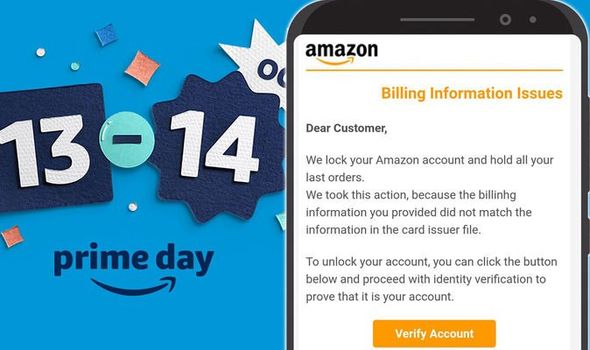
Fraud prevention company Bolster analyzed hundreds of millions of sites using deep learning, natural language processing, and computer vision technology to identify phishing patterns.
In particular, he pointed out that with the outbreak of the COVID-19 , there was a sharp increase in phishing attacks that spoof the World Health Organization (WHO) to deceive unsuspecting victims, peaking in the months of August and September.

According to Bolster, this fact proves that cybercriminals are waiting for a time like Amazon Prime Day to take advantage of unwary shoppers.
In the case of this particular Amazon event, scams can take several forms: a) a seemingly legitimate Amazon site that presents a new Kindle for $79, asking for confirmation of payment details from interested parties, b) a customer support site that asks for information about processing returns and order cancellations, and c) an “Amazon loyalty program” that offers a free iPhone 11 Pro to anyone who answers a few questions and fills in payment details.
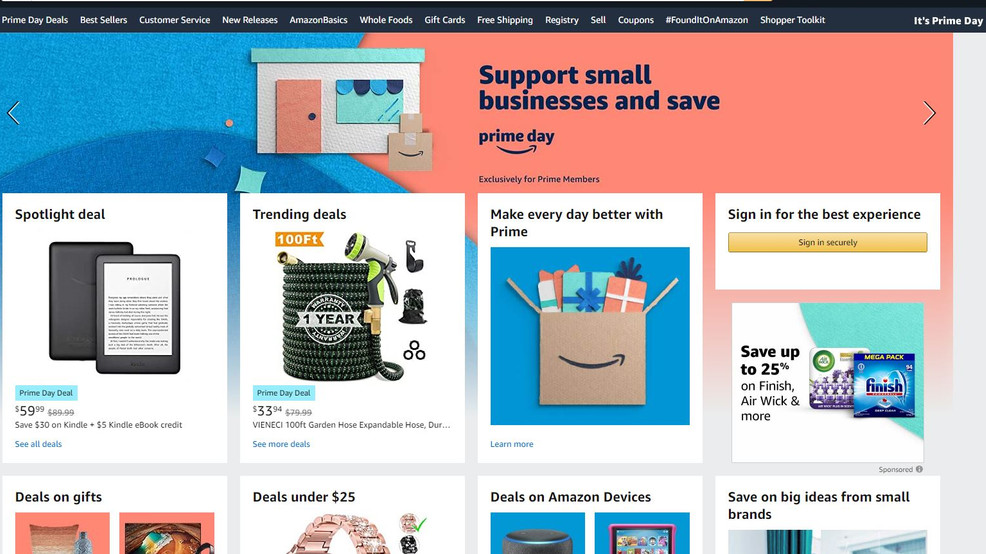
Thus, Bolster recommends that users never make purchases through links in spam emails, always check the shopping experience in case it differs from Amazon's rule, and check the site for details, such as blurry images or missing links, if they suspect it is a phishing page.
Neal Dennis, threat intelligence specialist at Cyware, said that the popularity of Amazon Prime Day and consumers' desire not to miss out on deals make it a tempting and lucrative target for scammers. Finally, Dennis advises online shoppers to follow some basic steps to spot phishing emails:
- Check the sender's address.
- To observe for poor syntax and grammar or for spelling errors.
- Use common sense when considering what an email is asking for.
