

The hacking group RansomHub has claimed responsibility for a recent cyberattack targeting auction house Christie’s.
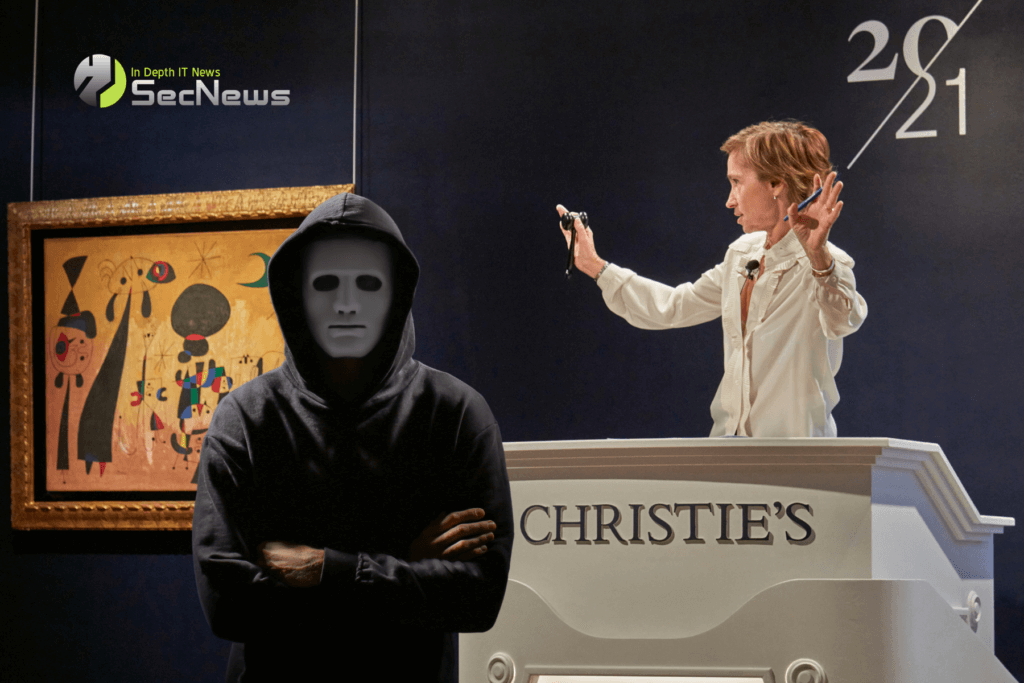
The attack, which took place earlier this month, has had a significant impact on the company. It initially occurred shortly before the start of the spring sale, which featured more than $850 million worth of artwork, and affected the auction house's website. As a result, Christie's officials were forced to suspend online bidding and were only accepting bids by phone or in person.
At the time, Christie's described it as a "technological security issue," but now the hacking group RansomHub has claimed to be behind the cyberattack.
See also: Cyberattack on ARRL takes Logbook of the World offline
The group claimed in a dark web that it had access to sensitive information about wealthy art collectors from around the world, and threatened to release the data by the end of May if a deal was not reached with the company.
The New York Times reported that “it was not immediately possible to verify RansomHub’s claims,” but added that several cybersecurity experts confirmed RansomHub’s existence and described the group’s claim of the attack as “plausible.”
Commenting on the incident, a Christie's spokesperson said: "Our investigations have determined that there was unauthorized access to parts of the Christie's network. We have also determined that the team behind the incident obtained a limited amount of personal data relating to some of our clients. There is no evidence to suggest that any financial documents or transaction records were compromised."
See also: British Columbia: Investigates cyberattacks on government networks

The hacking group RansomHub reportedly said it “tried to reach a reasonable solution with Christie’s, but they stopped communicating at some point.”
The group added that if it publishes the data containing customer information, Christie's "will face heavy fines" under the GDPR (General Data Protection Regulation).
Furthermore, potential consequences for art collectors include the loss of their privacy. Disclosure of personal data can lead to a breach of their privacy and expose them to unwanted publicity. Their reputation can be seriously damaged. Disclosure of sensitive information can damage their professional and social image, affecting their relationships with other collectors, galleries and auction houses.
See also: LockBit ransomware: Claimed responsibility for cyberattack on the city of Wichita
In addition, they may face financial losses. Making their details public could make them targets for fraud or blackmail, as well as affect the value of their collections.
Ransomware attacks are becoming increasingly common, with criminals raking in huge sums of money every year. The FBI said it does not support paying a ransom in response to a ransomware attack, as it does not guarantee that data will not be exposed.
🔒 Protect your privacy with Proton VPN
Swiss VPN from the creators of Proton Mail — strict no-logs policy, strong encryption, and built-in NetShield that blocks ads, trackers, & malware.
- ✔ No-logs, based in Switzerland (except 14-Eyes)
- ✔ NetShield: blocks ads, trackers & malicious domains
- ✔ Covers all devices — free version available
The link is an affiliate link — SecNews may receive a commission at no additional cost to you. It does not affect the independence of our article writing.
Source: www.digitaltrends.com
