

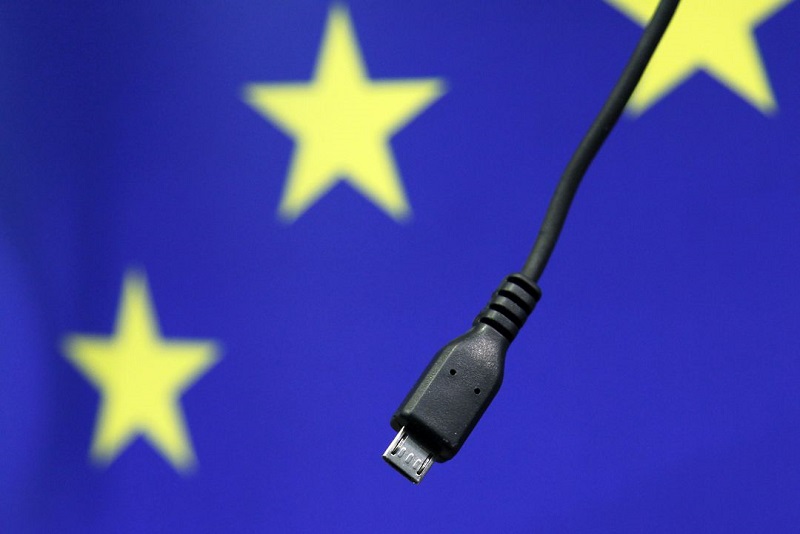
The European Parliament today voted overwhelmingly in favor of imposing USB-C as the common charging port on a wide range of consumer electronic devices, including iPhones and AirPods, by the end of 2024.
See also: Apple will not boost iPhone 14 production due to falling demand

See also: Stunning images of the Milky Way taken with an iPhone 14 Pro
The proposal, known as a directive, would require all consumer electronics manufacturers selling their products in Europe to ensure that a wide range of devices have a USB-C port. MEPs say the move will reduce e-waste, address product sustainability and make using different devices more convenient.
The proposal received 602 votes in favour, 13 against and eight abstentions. In a press release issued earlier today, the European Parliament states:
By the end of 2024, all mobile phones, tablets and cameras sold in the EU will have to be equipped with a USB Type-C charging port. From spring 2026, the obligation will also be extended to laptops. The new law, approved by the plenary on Tuesday with 602 votes in favour, 13 against and 8 abstentions, is part of a wider EU effort to reduce e-waste and empower consumers to make more sustainable choices.
Under the new rules, consumers will no longer need a different charger every time they buy a new device, as they will be able to use a single charger for a whole range of small and medium-sized portable electronic devices.
Regardless of their manufacturer, all new mobile phones, tablets, digital cameras, headphones and headsets, handheld video game consoles and portable speakers, e-readers, keyboards, mice, portable navigation systems, earbuds and laptops that are recharged via a wired cable, operate with a power supply of up to 100 Watts, must be equipped with a USB Type-C port.
All devices that support fast charging will now have the same charging speed, allowing users to charge their devices at the same speed with any compatible charger.
Exceptions will apply to devices that are too small to offer a USB-C port, such as smartwatches, health trackers and some sports equipment, but the legislation is expected to expand to other devices over time.
Now, the European Council must approve the directive so that it can be published in the EU Official Journal.
The EU effort continued last year, with the European Commission leading a revamped version of the directive. In April, the Committee on the Internal Market and Consumer Protection voted in favour of the directive, with 43 votes in favour and just two against. In June, the EU Committee on the Internal Market and Consumer Protection reached an agreement to introduce the directive in the European Parliament.
See also: Apple moves iPhone production to Vietnam and India
Both Apple analyst Ming-Chi Kuo and Bloomberg's Mark Gurman have said that Apple is testing a version of the iPhone that has a USB-C port instead of a Lightning port. Kuo believes that Apple could switch the iPhone to USB-C starting with the iPhone 15 in 2023.
Source of information: macrumors.com
