

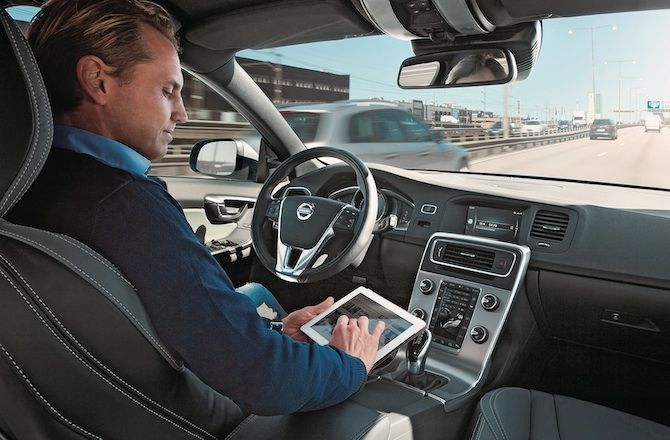
The fact that Volvo wants to become a champion in autonomous cars does not mean that it wants to eliminate conventional ones.
“We have no ambition to have a car that can drive in urban environments from A to B,” Volvo CEO Hakan Samuelsson told Car and Driver. “If you’re a normal consumer , is that really what you dream about?” Samuelsson asked. Adding, “We believe that in a situation where you’re not enjoying driving, you can turn on autopilot and then do something else, using that time more productively. That’s the product we’re developing.”
The majority of respondents to a Volvo survey said they drive for pleasure once a week. Because of this, the company has stated that it intends to maintain the ability to drive.
However, it's unclear whether Volvo didn't actually aim to create self-driving systems that could handle any driving situation.
By not having an autonomous driving system that could handle every driving situation, it pretty much defeats the purpose. For example, how would an elderly person who can't safely drive benefit from a car that can't drive itself in urban environments and requires a driver to drive it around town? Also, how would it constitute an autonomous mass transit , like the one planned in Beverly Hills?
Not only that. A driverless system that only worked on highways will put Volvo behind Google, which has been hard at work on city driving – the biggest challenge is autonomous driving.
We hope it was simply Samuelsson's mistake to misrepresent the company's self-driving future.
