

The Apple Vision Pro continues to expand its presence beyond entertainment, demonstrating that its true potential may lie in healthcare. Despite its high price tag of $3,500, which has limited its mass adoption by the general public, Apple’s spatial computing device appears to be finding a meaningful role in specialized environments, such as operating rooms. The recent use of the Apple Vision Pro in cataract surgeries in New York is yet another example of the technology’s transition from innovation to practical application.
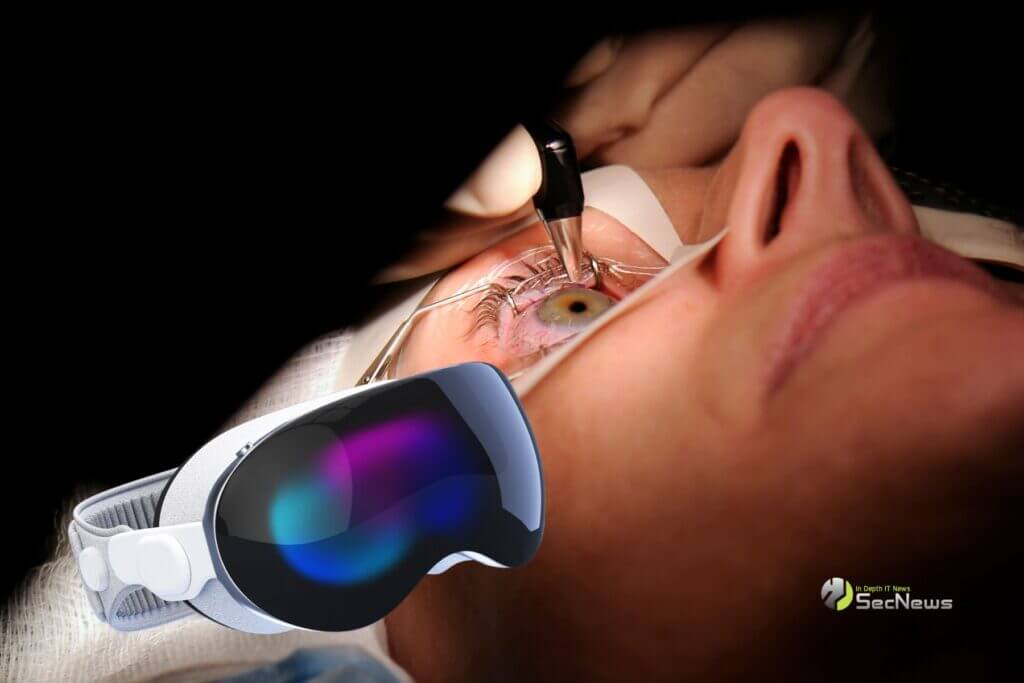
Doctors who have tested the device report impressive image quality and improved ergonomics, which are critical in demanding procedures. From colonoscopies to arthroscopy and now ophthalmology, the Vision Pro appears to offer a new level of precision and control, boosting surgeons' confidence during the procedure.
Apple Vision Pro: A Pioneer in Ophthalmic Surgery
A turning point was the successful cataract surgery performed by Eric Rosenberg, who became the first in the world to use Vision Pro in such a procedure. This achievement was not limited to an isolated case, but paved the way for the wider use of the technology in ophthalmology.
See also: 'Fiasco' with the launch of Vision Pro in Apple stores
Since then, the device has been used in hundreds of surgeries, confirming that it is not just an experiment, but a practical solution with real benefits. Surgeons are now able to work with greater precision, leveraging real-time digital data.
ScopeXR: The platform that changes data
A key player in this evolution is the ScopeXR, which was designed specifically for ophthalmic procedures. Through integration with advanced surgical microscopes and support for multiple connection protocols, the system enables high-resolution stereoscopic image transmission directly to Vision Pro.
The result is an environment where the surgeon can simultaneously view the surgical field and critical diagnostic data. At the same time, remote collaboration allows experts from around the world to participate in real time, enhancing decision-making and overall surgical safety.
See also: Apple: What it presented at the ICLR 2026 conference

The importance of remote collaboration
One of the most important advantages of this technology is the ability to connect healthcare professionals regardless of geographical location. Through Vision Pro and the ScopeXR platform, an experienced surgeon can guide or advise in real time, even if they are on another continent.
This approach has the potential to reduce inequalities in access to specialized medical knowledge, offering better care to patients in remote or under-equipped areas, while creating new educational opportunities for medical students and young professionals.
Broader applications in health
Vision Pro's use is not limited to cataract surgery. It has already been used in spinal fusion procedures in the UK, and is also used for patient education, helping them understand complex medical procedures through visualization.
Additionally, research efforts are looking at using the device to improve communication in patients with neurological conditions, such as spinal cord injuries or ALS. Apple is also exploring ways to integrate brainwave sensors, paving the way for even more advanced applications.
See also: MacBook notch may be replaced with removable cameras

The future of spatial computing in medicine
As technology evolves, the Vision Pro looks set to usher in a new era for surgery and medicine in general. The upcoming upgrade visionOS, expected to be unveiled at WWDC 2026, may bring even more features that will enhance the device's usefulness.
The critical question now is not whether such technologies will be adopted, but how quickly they will be integrated into everyday medical practice. If the trajectory so far is any indication, then the operating room of the future will rely not only on human skill, but also on the power of augmented reality and interconnected knowledge.
