

The recent and much-discussed "planetary parade" was an interesting celestial event that likely prompted even rare skywatchers to search for the seven planets spread across the sky.
See also: Saturn: 128 new moons discovered in orbit around it
Some of the planets – like Venus, Jupiter and Mars – were relatively easy to spot due to their great brightness. Others, like Mercury and Saturn, were a little harder to see because they were quite low on the west-southwest horizon against a fairly bright twilight sky.
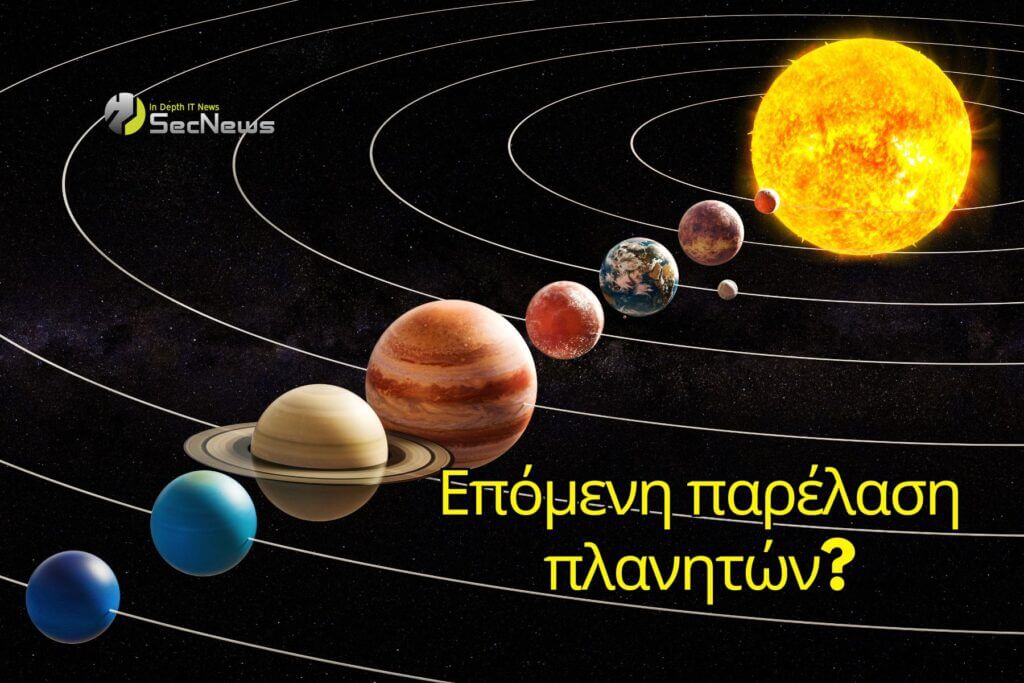
Both remaining planets, Uranus and Neptune, could only be seen by observers with good binoculars or amateur telescopes. Moreover, they had to know exactly where in the sky to look.
See also: Elliptical galaxy NGC 3640 devours smaller ones
All planets visible to the naked eye, as well as the moon, closely follow an imaginary line in the sky called the ecliptic. The ecliptic is also the path that the sun appears to take in the sky as a result of the Earth's rotation around it.
Technically, the ecliptic represents the extension or projection of the plane of Earth's orbit onto the sky. But because the moon and planets move in orbits whose planes do not differ much from orbital plane , these bodies, when visible in our sky, always remain relatively close to the ecliptic line.
See also: Hubble: The most detailed “portrait” of Andromeda has been created
On April 20, 2026, Mercury, Mars, and Saturn will squeeze into a space of less than 1.7 degrees. Unfortunately, the planets will be very low, near the eastern horizon, with a bright twilight in the sky just a half hour before sunrise .You'll probably need binoculars to see the tight triangle formed by these three worlds. Southern Hemisphere observers will have the advantage that this trio will appear somewhat higher and rise about an hour before sunrise, making the planets somewhat more visible.
Source: space.com
